






- Find the best broker for your trading needs
- Compare spreads, fees, and platforms
- Read in-depth reviews and analysis


Select a different country or region to view content tailored to your location.

75-90% of retail traders lose money trading Forex and CFDs. You should consider whether you understand how CFDs and leveraged trading work and if you can afford the high risk of losing your money. We may receive compensation when you click on links to products we review. Please read our advertising disclosure. By using this website, you agree to our Terms of Service.

Alison Heyerdahl is the Head of Content at FxScouts, a Chartered Market Technician (CMT), and an experienced trader, as well as a financial writer with extensive expertise in Forex trading, broker analysis, and market research. She has reviewed 100+ brokers, publishes weekly YouTube trading videos, and co-hosts the “Let’s Talk Forex” podcast.

Alison Heyerdahl is the Head of Content at FxScouts, a Chartered Market Technician (CMT), and an experienced trader, as well as a financial writer with extensive expertise in Forex trading, broker analysis, and market research. She has reviewed 100+ brokers, publishes weekly YouTube trading videos, and co-hosts the “Let’s Talk Forex” podcast.
Chris Cammack is the Partner Manager and a financial writer at FxScouts. Chris builds and maintains our relationships with our partners to provide our users with the best Forex trading experience.
Leverage is one of the most powerful tools available to forex traders – and one of the most misused. It lets you control larger positions with less capital, amplifying both gains and losses in equal measure. Too many traders see it as a shortcut to bigger profits rather than the double-edged sword it is, and by the time they realise that, it’s often too late.
In this article, I look at high-leverage accounts across a range of brokers. Every broker on this list offers high leverage through regulated entities, negative balance protection, and adjustable leverage settings.
Trusted. Transparent. Tested.
For over a decade, we’ve set the standard in forex broker reviews—collecting thousands of data points yearly to deliver unbiased, expert-backed insights.
Skip the trial and error! Below, you’ll find the best Malaysian forex brokers for 2026—thoroughly tested, verified, and ranked, so you can trade with confidence.

Swipe to scroll
Broker | Overall Rating Our overall rating evaluates brokers on platform quality, fees, service, regulation, and instruments. Higher scores reflect better performance and reliability. | Visit Broker Click to visit the broker’s official website for more information and to open an account. | Max. Leverage (Forex) Maximum leverage for forex trading is the ratio of borrowed funds you can use to increase your position size. Other instruments may have different leverage limits. | Min. Deposit The minimum amount of money required to open an account with this broker. | EUR/USD - Standard Spread This is the spread on EUR/USD using the account with the smallest deposit requirements. | Trading Cost - Standard Account Total trading cost at the time of last update, for 1 lot of EUR/USD using the account with the lowest minimum deposit. Includes spread and commission. | Compare Select two brokers using the checkboxes to compare their features, fees, platforms, and more side by side. |
|---|---|---|---|---|---|---|---|
 | 500:1 | USD 200 | 0.10 pips | USD 8 | |||
 | 500:1 | USD 50 | 1.00 pips | USD 10 | |||
 | 1000:1 | USD 0 | 1.00 pips | USD 10 | |||
 | 400:1 | USD 100 | 0.90 pips | USD 9 | |||
 | 1000:1 | USD 5 | 0.60 pips | USD 6 | |||
 | 500:1 | USD 0 | 0.70 pips | USD 7 | |||
 | 500:1 | USD 100 | 0.00 pips | USD 6 | |||
 | 200:1 | USD 100 | 1.40 pips | USD 14 | |||
 | 1000:1 | USD 10 | 1.70 pips | USD 17 | |||
 | 1000:1 | USD 0 | 1.00 pips | USD 10 |










Select another broker to another broker to compare features, fees, and platforms side by side.
Find Your Ideal Forex Broker
Select another broker to another broker to compare features, fees, and platforms side by side.
0.1 pips
CMA, FSA-Seychelles, ASIC, CySEC
USD 200
TradingView, MT5, cTrader, MT4
500:1
Delivers access to institutional-grade liquidity and tight spreads (0.0 pips reported on major pairs) which complements high-leverage trading by reducing cost drag and ensuring quicker access to market moves.
Traders can choose Standard or Raw accounts and adjust the leverage setting—offering flexibility as trading style evolves.
With MetaTrader 4, MetaTrader 5 and cTrader available, plus servers in major hubs, Malaysian users get robust platform options which suit high-leverage trading where execution speed and stability matter.
Although the local entity is offshore, IC Markets provides segregated client funds and negative balance protection which helps when the risk is increased by high leverage.
IC Markets does not hold a licence via the Securities Commission Malaysia or under a Malaysian-regulated entity for local clients, meaning Malaysian traders assume regulatory risk when using high leverage.
The lack of a Malaysian-Ringgit account means currency conversion costs and deposit/withdrawal frictions may affect net returns especially when trading large positions under high leverage.
IC Markets | Best for: Scalpers, short-term swing traders or those testing aggressive positions with limited capital.

FxScouts
 YouTube
Select another broker to another broker to compare features, fees, and platforms side by side.

1 pips
FSA-St-Vincent, FSCA, ASIC
USD 50
MT5, MT4
500:1
One of the highest leverage offerings available from a globally regulated broker serving Malaysian clients.
Raw spreads from 0.0 pips help maintain low trading costs during high-leverage operations.
Includes negative balance protection and live margin monitoring—essential for extreme leverage.
Scalpers, news traders, and high-frequency systems benefit from low latency and minimal slippage.
MetaTrader users receive standard leverage levels rather than ultra-high options.
Traders who prefer locally regulated brokers for high-leverage trading may look elsewhere.
Select another broker to another broker to compare features, fees, and platforms side by side.
0.0 pips
CMA, FSA-Seychelles, FSC, FCA, FSCA
USD 0
HFM Trading App, MT5, MT4
1000:1
Offers high leverage to maximise profit potential
Account options include Micro, Premium, Zero Spread, and PAMM
Supports trading with popular and reliable platforms
Frequently hold contests and offer bonuses to traders
Spreads on certain accounts may be higher than other brokers.
HFM | Best for: Traders looking for high leverage and a variety of trading account options
FxScouts
YouTube


Select another broker to another broker to compare features, fees, and platforms side by side.
0.9 pips
ISA, CMA, CBI, FSA-Japan, ASIC, CySEC, FSCA
USD 100
AvaOptions, Avatrade Social, MT5, MT4
400:1
More than enough for retail traders.
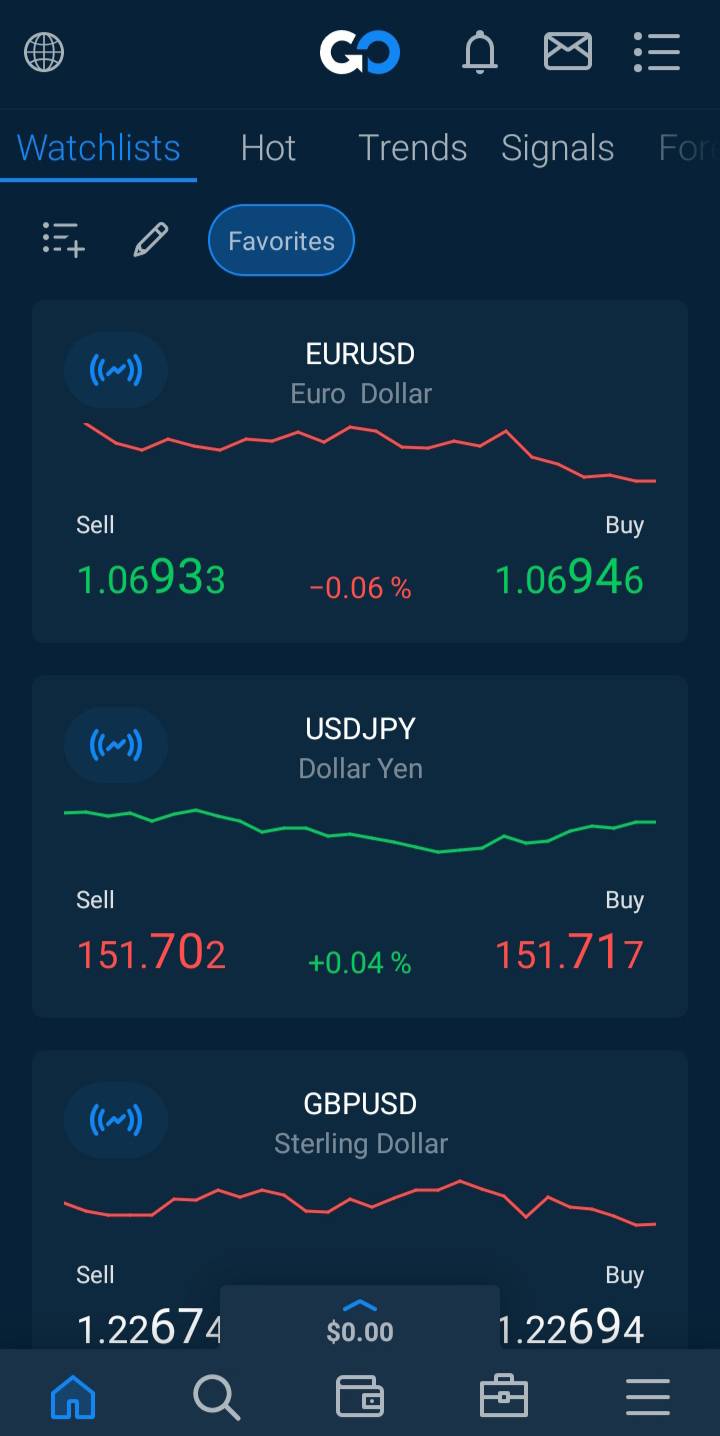
Full mobile support and the AvaProtect feature to secure high-leverage positions.
AvaProtect helps limit losses on leveraged trades during volatile periods.
New traders can learn high-leverage trading with minimal risk via videos and a real-time demo account.
Some plugins or EAs may have limited functionality on the AvaTradeGO proprietary platform compared to MT5.
AvaTrade | Best for: Beginner and intermediate traders who want high leverage with an intuitive platform
FxScouts
YouTube

Select another broker to another broker to compare features, fees, and platforms side by side.
0.6 pips
FSC, DFSA, CySEC, ASIC
USD 5
MT5, MT4
1000:1
Operates under FCA, ASIC, CySEC and IFSC – ensuring a high level of transparency and segregation of funds.
Offers account types that adapt to different profiles, including micro-lots for risk control.
Provides professional educational content, including live sessions and frequent webinars, in Malay.
In all accounts and jurisdictions, for protection against losses that exceed the deposited capital
Despite good execution speed, XM acts as a market maker in most cases.

XM | Best for: Beginner traders who want competitive spreads with micro lots
FxScouts
YouTube

Select another broker to another broker to compare features, fees, and platforms side by side.
Leverage ratios are often presented as impressive headline figures. Understanding what they actually mean in practice is what determines whether you use them safely or blow up your account in a single session.
Leverage is shown as a ratio like 1:500 – for every $1 you put up, you control $500. So with 1:500 leverage, you need just $200 to open a $100,000 EUR/USD trade. At 1:30 (the standard FCA limit), you’d need $3,333 for the same position. Less capital upfront means higher leverage – and higher risk. A small move against you wipes out your deposit far faster. The first time I compared the two, that lower margin felt like a huge advantage. That’s exactly the trap.
At 1:100 leverage, a 1% move against you wipes out your entire deposit. At 1:500, it only takes 0.2%. For context, EUR/USD regularly moves 0.5–1.0% in a single session – more during major news. This isn’t a rare worst case; it’s normal market behaviour. Without a stop-loss and sensible position sizing, a high-leverage account can be destroyed in a day. I’ve been close enough myself to know you only learn that lesson once.
If your balance drops too far, your broker automatically closes your trades to prevent losses exceeding your deposit. This trigger – the stop-out level – typically sits between 20% and 50% of required margin, depending on the broker. The problem: if you’re using maximum leverage on a large position, you’re already trading right next to that threshold. One small adverse move and the broker closes everything – usually at the worst possible price. Before I place any trade, I check where my stop-out sits and make sure my account has enough room to absorb normal market swings.
More leverage isn’t always better. I’ve seen brokers offering everything from 1:30 to unlimited, but the headline number turned out to be the least important factor. What actually matters is the environment around it – regulation, execution, and risk tools. Here’s what to focus on:
This is the most important thing to check before opening any high-leverage account – and you’d be surprised how many traders skip it. The same broker often operates multiple entities under different regulators. For example, a broker regulated by the FCA in the UK caps retail leverage at 1:30, while its offshore entity under a Seychelles or Belize authority may offer 1:500 or higher. These are very different regulatory environments with vastly different protections.
Tier-1 regulators like the FCA, ASIC, and CySEC enforce strict client fund requirements; lower-tier entities often provide far fewer protections, if any. Which entity you’ll be placed under is often buried in the fine print – read it carefully before you deposit a cent.
Find out what regulator provides what types of protection here.
When a leveraged position moves sharply against you, your balance can hit zero faster than a stop-loss can save it – particularly during news events, overnight gaps, or extreme volatility. Negative balance protection means the broker absorbs the loss rather than holding you liable for the deficit.
All reputable high-leverage brokers offer this. While it’s implied under top-tier regulation, it should still be explicitly stated for the account type you’re opening. If it isn’t, that’s a dealbreaker for me.
Just because a broker offers 1:1000 doesn’t mean you should trade anywhere near it. The best brokers let you set your own level – a broker that only offers a fixed maximum, or makes it difficult to reduce, doesn’t have trader protection in mind. I always set mine well below the cap and adjust upward only when my strategy specifically requires it. Even as an experienced trader, I almost never use the maximum.
High leverage doesn’t change how the market moves – it changes how much those movements affect your account. The same 50-pip move on EUR/USD produces a $500 profit or loss on a standard lot, whether your leverage is 1:30 or 1:500. What changes is how much of your own capital is tied up as margin, and how quickly a negative move can exhaust it. It took me a while to grasp this, because the marketing makes high leverage sound like it increases your earning potential. It doesn’t – it increases your exposure relative to your capital.
The right leverage isn’t the maximum available – it’s the level that lets you manage positions within your risk tolerance while keeping enough margin to absorb normal volatility. For most trading styles, that’s somewhere between 1:10 and 1:50, even when the broker offers far more.
The maximum leverage available to you depends on where you live and which regulatory entity you trade under. This directly determines your account protections and the legal framework governing your funds. Here’s how it breaks down:
| Regulator / region | Max retail leverage | Max professional leverage | Key protection |
|---|---|---|---|
| FCA (UK) | 1:30 | 1:500 | £85,000 FSCS + FOS access ✓ |
| ESMA / CySEC (EU) | 1:30 | 1:500 | €20,000 ICF compensation ✓ |
| ASIC (Australia) | 1:30 | 1:500 | AFCA dispute resolution ✓ |
| DFSA (UAE) | 1:50 | 1:200 | Limited formal compensation |
| FSCA (South Africa) | 1:200 | N/A | Segregated funds required |
| FSA Seychelles | 1:500+ | N/A | Segregated funds only |
| FSC Belize / St. Vincent | 1:1000–2000+ | N/A | Segregated funds only; no formal scheme |
To qualify as a professional client under FCA, ASIC, or CySEC rules, traders must typically meet two of three criteria: 10+ significant trades per quarter over the past year, a portfolio exceeding €500,000, or relevant financial sector experience. Professional status means forfeiting certain retail protections, including compensation schemes.
High leverage isn’t the problem. Using it without understanding these five mistakes is. I’ve seen every one play out – some in my own trading, most in the accounts of traders I’ve spoken to over the years.
Just because a broker gives you 1:500 doesn’t mean you should use it. Most experienced traders I know sit between 1:10 and 1:50. At max leverage, a tiny 0.2% move against you and your margin is gone – that’s a normal few minutes on any trading day. I set my leverage to match my position sizing, not leave it at the broker’s ceiling. The maximum is there for flexibility, not as a starting point.
At normal leverage, holding a losing trade without a stop is bad practice. At high leverage, it can wipe your account in one session. A 1:200 EUR/USD trade that moves just 50 pips against you eats 10% of a standard lot’s margin – that can happen in minutes during an ordinary session. I set a stop-loss on every trade, built into the order before it goes live. No exceptions, no “I’ll watch it manually” – because you probably won’t.
Major releases – NFP, CPI, rate decisions, and increasingly political announcements – create the sharpest, most chaotic moves in forex. Spreads blow out, slippage is everywhere, and price can gap clean through your stop-loss. I’ve had stops triggered not because my analysis was wrong, but because the spread widened so aggressively it ate through my level. Now, if I’m carrying leveraged positions ahead of a high-impact event, I either scale down or close out entirely. Sitting in full-size leveraged trades through news is one of the most consistently expensive mistakes in retail forex.
One word of caution: with world politics being what they are, unscheduled announcements can trigger wild spikes too – so even if you avoid trading the news, always keep a close eye on it.
The broker offering 1:3000 isn’t necessarily better than one offering 1:500 – in many cases it’s significantly worse, because the highest ratios are only available through entities with minimal regulatory oversight. Choosing a broker for its leverage ceiling means selecting the least protected trading environment available. Max leverage matters far less than the regulatory entity, negative balance protection, and execution quality. Read about other traders’ experiences on forums and YouTube before making this mistake.
Leverage controls your margin requirement. Lot size controls your actual exposure. You can trade a full standard lot at 1:30 or 1:1000 – the difference is how much margin is reserved. Risk per pip is identical. What matters for risk management is your lot size and stop-loss distance, not your leverage ratio. I’ve spoken to traders adjusting their leverage up when what they actually needed was to reduce their lot size. Once you understand the distinction, the way you think about leverage changes completely.
The right choice depends on the leverage level you need and the regulatory environment you’re comfortable with. Based on my testing, here’s what I’d recommend depending on your situation.
| My situation | Best pick | Why |
|---|---|---|
| I want the highest possible leverage with no minimum deposit | IC Markets | Unlimited leverage on accounts under $1,000 equity; $0 minimum deposit; leverage adjustable in client portal; 24/7 support |
| I want very high leverage with multiple account types including copy trading | ACY | 1:2000 leverage, six account types including HFcopy for copy traders; $0 minimum deposit; MT4, MT5, and proprietary app |
| I want high leverage with the widest instrument range and micro accounts | HFM | 1:1000 via FSC Belize; Micro, Standard, and Ultra Low accounts; $5 minimum deposit; 1,000+ instruments on MT4/MT5 |
| I want high leverage with ultra-low raw spreads for scalping or EAs | Avatrade | 1:1000 via FSA Seychelles; Raw account at 0.0 pips + $6 commission; scalping, hedging, and EAs all explicitly permitted |
| I want high leverage with an award-winning proprietary platform | XM | 1:500 via Belize FSC; xStation 5 is one of the best proprietary platforms available; $0 minimum deposit; FCA and CySEC main entities |


Here are answers to some of the most common questions that traders have about leverage in Forex trading.
Leverage, expressed as a ratio, lets you control a position larger than your account balance. A ratio of 1:100 means $1 of your capital controls $100 of market exposure. Leverage doesn’t change how many pips a trade earns or loses – it changes how much of your own money you need to open a position, and how quickly you can lose it when the market moves against you.
Getting set up with a high-leverage account isn’t just about clicking “register” and picking the biggest number. You need to choose the right entity, set your leverage properly, and have your risk management locked in before placing a trade.
Step 1: Identify the regulatory entity you’ll be onboarded under
Before you sign up, find out where you’ll be onboarded, how the entity is regulated, and what protections are offered. This one detail determines everything – your protections, your maximum leverage, and your options if something goes wrong. If the broker’s Tier-1 entity (FCA, ASIC, CySEC) applies to you, you’ll be capped at 1:30 as a retail client. If you’re being routed to an offshore entity, confirm whether negative balance protection actually applies to your account. I do this check every time – it’s the one step you cannot skip.
Step 2: Open an account and set your leverage before depositing
Most brokers let you choose your leverage during signup or through the client portal before you fund the account. Do it then – not after you’ve deposited and feel the itch to start trading. For most traders, somewhere between 1:10 and 1:50 is sensible. The fact that the broker offers 1:500 isn’t a suggestion – it’s just the upper limit. I started at 1:30 and only moved it once I was confident my risk management could handle the change.
Step 3: Calculate your position size before every trade
This is where many traders go wrong, treating leverage and position sizing as the same thing. They’re not. Before opening a trade, decide how much of your account you’re prepared to lose if it goes against you – most approaches say 1–2% per trade. Then calculate the lot size that gives you that risk based on your stop-loss distance. You’re sizing to your risk tolerance, not trying to use up available margin. I run this calculation before every trade, even when I think I already know the answer.
Step 4: Set a stop-loss on every position before it opens
At high leverage, a stop-loss isn’t optional. Before entering a position, decide where your trade idea is no longer valid and set that as your stop-loss as part of the order itself. Not after, and definitely not “once I see how it moves.” Your stop-loss distance combined with lot size determines your actual risk – leverage only affects the margin set aside. I never open a leveraged position without a stop in place. Non-negotiable.
Step 5: Monitor your margin level and avoid holding through news events
Keep your free margin comfortably above your broker’s stop-out level at all times. A good rule of thumb: never have more than 20–30% of your available margin tied up across open positions. That gives you enough breathing room so normal movement doesn’t accidentally trigger liquidation. When a major release is coming – NFP, rate decisions – seriously consider scaling back or closing out entirely. I held through a news release once early on. The spread blew out so fast my stop got filled way past my level, and the loss was far bigger than planned. That’s a lesson you learn once.
It depends on the broker and entity. IC Markets offers unlimited leverage under specific conditions (accounts under $1,000 equity), ACY up to 1:2000, HFM and Avatrade up to 1:1000, and XM up to 1:500 – all through offshore entities. In tightly regulated markets like the UK, EU, and Australia, retail clients are limited to 1:30 on major pairs. Professional clients at Tier-1 brokers can access up to 1:500 by meeting eligibility criteria, but that typically requires high trading volumes.
It depends entirely on how you use it. What makes it dangerous is poor position sizing and not using a stop-loss. You can trade at 1:500 with a tight stop and sensible lot size, knowing exactly what you stand to lose. Without a stop, that’s where things get ugly. Most traders who blow accounts aren’t doing it because of the leverage number – they’re trading too big for their account size. The traders I’ve seen handle it well size their positions like they’re still at 1:30.
Tier-1 regulators like the FCA, ASIC, and CySEC require segregated client funds, negative balance protection, compensation schemes, and independent dispute resolution. They also cap leverage at 1:30. Lower-tier regulators don’t always require these protections – if something goes wrong, you’re on your own. Make sure you know where the broker is regulated and what protections apply.
If your account gets wiped out – say a leveraged position gaps through your stop during a news event – the broker resets you to zero instead of coming after you for the difference. Without it, you could owe more than you deposited. Every broker on this list offers it, but I always double-check it applies to the exact entity and account type I’m signing up with.
The point where your broker starts closing positions to prevent your account going into the red. It’s expressed as a percentage of required margin – a 50% stop-out means your trades get liquidated when equity drops to half the required margin. When you’re using most of your available margin, you’re already sitting close to that line, and any normal pullback could trigger it. Keep an eye on your margin level or you’ll find trades closing unexpectedly.
With good brokers, yes – if one doesn’t let you adjust, I’d be wary of trading with them. Changes usually take effect from the next session, though some apply immediately. Lowering leverage is typically unrestricted; increasing it may require confirmation that you understand the added risk. I keep mine at the minimum my strategy requires rather than leaving it at the maximum.
Generally, no. Stick to between 1:10 and 1:30 regardless of what the broker allows. High leverage short-circuits the learning process because the margin for error becomes razor thin. When I started, I spent months on a demo account at 1:30 before touching the leverage settings. I’d tell anyone new to do the same.
Two sides of the same coin. Leverage is the ratio – how much exposure you get relative to your capital. Margin is the dollar amount held aside to keep your position open. So 1:100 means a 1% margin requirement; 1:500 means 0.2%. On a standard $100,000 EUR/USD lot, that’s the difference between putting up $1,000 or $200. The critical thing traders miss: your position size, pip value, and risk per trade stay exactly the same regardless of leverage. The only thing that changes is how much margin gets locked up. Once that clicked for me, I stopped thinking of leverage as something that makes trades bigger and started seeing it as something that frees up margin. That shift made a real difference to how I manage risk.
Explore more resources that fellow traders find helpful! Check out these other guides to enhance your forex trading knowledge and skills. Whether you’re searching for the best brokers, educational material, or something more specific, we’ve got you covered:

Compare the best Forex brokers in Malaysia and find the one that suits your trading style and budget.

Regulation is the most important consideration when choosing a broker. Learn how regulators protect traders and how the Forex market is regulated.

Explore the best Forex brokers for beginners in the Malaysia with user-friendly platforms, educational resources, and demo accounts.
60-90% of retail traders lose money trading Forex and CFDs. You should consider whether you understand how CFDs and leveraged trading work and if you can afford the high risk of losing your money. We may receive compensation when you click on links to products we review. Please read our advertising disclosure. By using this website, you agree to our Terms of Service.
Partner Manager and Financial Writer
Head of Content
Financial Writer




Welcome to the FxScouts community! We’re thrilled to have you on board. You’ve successfully signed up for our forex newsletter, where you’ll receive expert insights, market analysis, and the latest news straight to your inbox.
Get ready to stay ahead of the curve with our regular updates designed to help you make informed trading decisions.
Happy trading!
The FxScouts Team