







- Find the best broker for your trading needs
- Compare spreads, fees, and platforms
- Read in-depth reviews and analysis


Select a different country or region to view content tailored to your location.

75-90% of retail traders lose money trading Forex and CFDs. You should consider whether you understand how CFDs and leveraged trading work and if you can afford the high risk of losing your money. We may receive compensation when you click on links to products we review. Please read our advertising disclosure. By using this website, you agree to our Terms of Service.

Alison Heyerdahl is the Head of Content at FxScouts, a Chartered Market Technician (CMT), and an experienced trader, as well as a financial writer with extensive expertise in Forex trading, broker analysis, and market research. She has reviewed 100+ brokers, publishes weekly YouTube trading videos, and co-hosts the “Let’s Talk Forex” podcast.

Alison Heyerdahl is the Head of Content at FxScouts, a Chartered Market Technician (CMT), and an experienced trader, as well as a financial writer with extensive expertise in Forex trading, broker analysis, and market research. She has reviewed 100+ brokers, publishes weekly YouTube trading videos, and co-hosts the “Let’s Talk Forex” podcast.
Chris Cammack is the Partner Manager and a financial writer at FxScouts. Chris builds and maintains our relationships with our partners to provide our users with the best Forex trading experience.
Trading the VIX — often called the market’s “fear index” — gives traders a way to speculate on, or hedge against, sudden jumps in market volatility. The VIX typically rises when markets fall sharply and investors demand protection, and it falls when markets stabilise. But volatility products behave differently from normal indices, and they can carry higher risk, especially through options, futures, or leveraged CFDs.
This guide explains what the VIX is, how volatility products work, and how to choose the best brokers in 2026 for trading or hedging market volatility safely and effectively.
Trusted. Transparent. Tested.
For over a decade, we’ve set the standard in forex broker reviews—collecting thousands of data points yearly to deliver unbiased, expert-backed insights.
Skip the trial and error! Below, you’ll find the best Malaysian forex brokers for 2026—thoroughly tested, verified, and ranked, so you can trade with confidence.

Broker | Official Site | VIX 75 Index | Max. Leverage | Cost of Trading Total trading cost at the time of last update, for 1 lot of EUR/USD using the account with the lowest minimum deposit. Includes spread and commission. | Regulated in | Compare | ||
|---|---|---|---|---|---|---|---|---|
 | Yes | USD 100 | 400:1 | USD 9 |        | |||
 | Yes | USD 100 | 500:1 | USD 6 |    | |||
 | Yes | USD 0 | 1000:1 | USD 10 |  | |||
 | Yes | USD 0 | 200:1 | USD 6 |       | |||
 | Yes | USD 0 | 500:1 | USD 7 |   | |||
 | Yes | USD 200 | 500:1 | USD 8 | | |||
 | Yes | USD 5 | 1000:1 | USD 6 | |







Select another broker to another broker to compare features, fees, and platforms side by side.
Find Your Ideal Forex Broker
Select another broker to another broker to compare features, fees, and platforms side by side.
0.9 pips
ISA, CMA, CBI, FSA-Japan, ASIC, CySEC, FSCA
USD 100
AvaOptions, Avatrade Social, MT5, MT4
400:1
Unique to AvaTrade, AvaProtect lets you insure VIX positions for a small fee, useful for volatility spikes
VIX trades incur zero commissions — only spreads apply, simplifying cost management for beginners
VIX index is included in AvaTrade's swap-free Islamic account policy, rare among global brokers
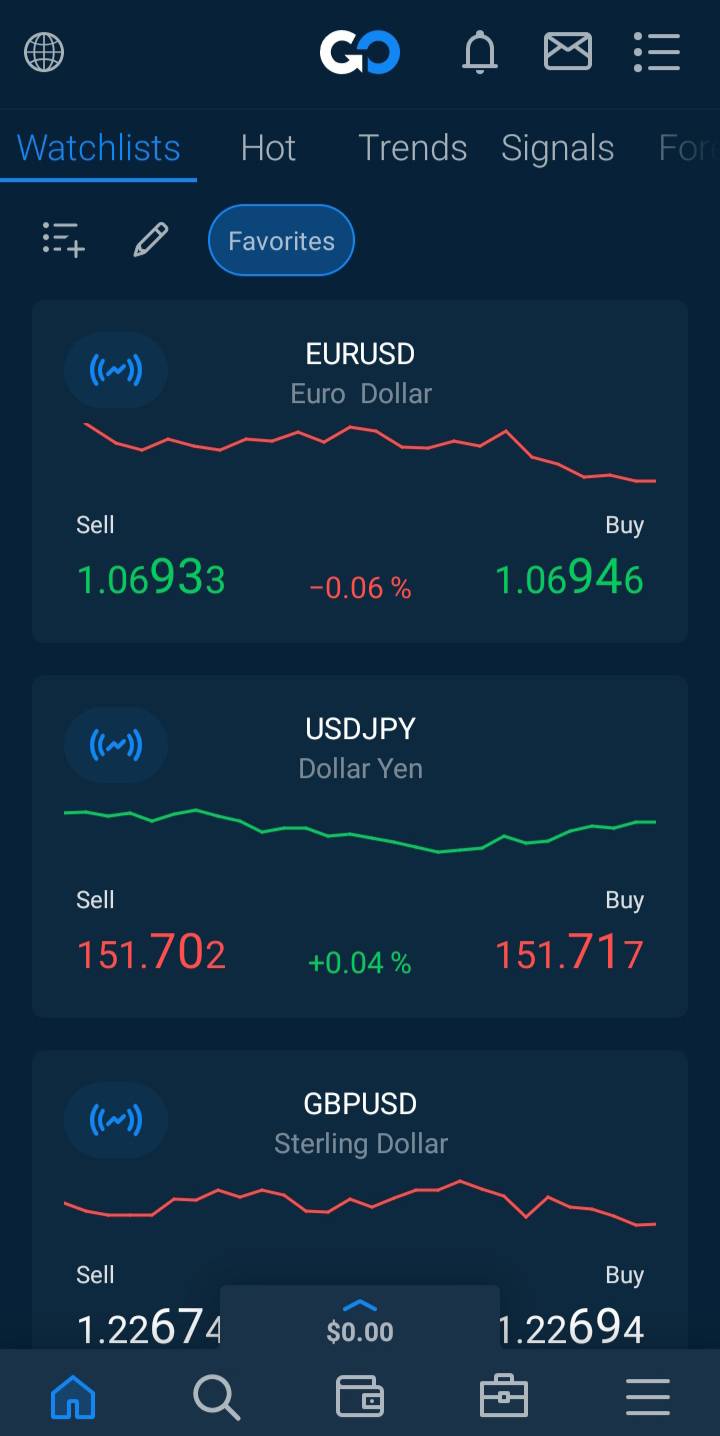
Trade VIX on any device with AvaTradeGO, MT5, or MT4 — optimized for both manual and automated strategies
Especially during Fed announcements or inflation data, spreads may widen to over 10 points
Unlike cTrader or TradingView, charting tools on AvaTrade’s MT5 are less advanced
AvaTrade | Best for: Malaysian traders looking for simple, all-in-one access to VIX trading with integrated risk protection tools

FxScouts
 YouTube

Select another broker to another broker to compare features, fees, and platforms side by side.
0.0 pips
CMA, FSA-Seychelles, FSC, FSCA, ASIC
USD 100
TradingView, MT5, cTrader, MT4
500:1
FP Markets routes orders directly to liquidity providers with no dealing desk, improving transparency and slippage
Rarely offered IRESS platform enables institutional-style index trading beyond MT5, ideal for portfolio diversification
Supports low-latency algorithmic trading strategies on VIX through free VPS if you meet monthly volume criteria
Malaysians can trade under FP Markets Australia or offshore, both offering solid fund protection
While social trading is offered, it’s mainly for FX; VIX is excluded
Swap-free accounts do not extend to most indices including VIX
FP Markets | Best for: Malaysian traders who value DMA pricing and institutional-grade execution for indices like VIX
FxScouts
YouTube
Select another broker to another broker to compare features, fees, and platforms side by side.
0.0 pips
CMA, FSA-Seychelles, FSC, FCA, FSCA
USD 0
HFM Trading App, MT5, MT4
1000:1
Trade VIX from as little as 0.01 lots — perfect for newcomers testing index volatility
VIX is tradable under multiple account types (Premium, Zero, etc.), offering flexibility in fees and leverage
HFM runs index-specific sessions in its education hub, helping users decode the VIX
In times of global market stress, spreads on VIX may reach up to 5-8 points
Only MT4/MT5 — limits customization for advanced users
HFM | Best for: Malaysian traders who want micro-lot VIX trading with educational support and local funding options
FxScouts
YouTube


Select another broker to another broker to compare features, fees, and platforms side by side.
0.6 pips
BMA, CFTC, FINMA, FMA, BaFin, DFSA, FSA-Japan, MAS, ASIC, FSCA, FCA
USD 0
TradingView, L2 Dealer, MT4
200:1
Unlike CFD-only brokers, IG gives access to real VIX futures prices from CBOE — closest to true market valuation
Exclusive tools such as “Volatility Finder” and market sentiment heatmaps ideal for institutional-grade insights
Serious traders can use charting platforms with Level 2 data and programmable strategies
Offers unmatched transparency and capital safety for Malaysian high-net-worth traders
Starts at ~$300 depending on platform and region
IG's tools cater more to pro traders than retail newbies

IG | Best for: Professional Malaysian traders wanting deep VIX analytics, real-time volatility tools, and exchange-based pricing
FxScouts
YouTube
Select another broker to another broker to compare features, fees, and platforms side by side.
0.8 pips
KNF, FSC, FCA, CySEC
USD 0
xStation5
500:1
XTB offers a powerful proprietary platform with real-time sentiment indicators and risk tools—perfect for VIX volatility plays.
XTB regularly hosts free webinars and market analysis centered on VIX and volatility-based strategies.
Cost-effective for traders looking to manage their funds actively.
FSCA, FCA, and KNF licenses boost trust and fund security for traders
Traders are limited to the xStation 5 platform for volatility index exposure.
VIX spreads typically wider than brokers offering raw or DMA pricing.
XTB | Best for: Active Malaysian traders looking for an all-in-one web platform with built-in VIX charting and no third-party terminals
FxScouts
YouTube
Select another broker to another broker to compare features, fees, and platforms side by side.


The VIX is the ticker for the CBOE Volatility Index, a forward-looking measure of expected 30-day volatility in the S&P 500, derived from SPX options prices. Traders use it to gauge market sentiment, hedge equity exposure, or trade volatility directly.
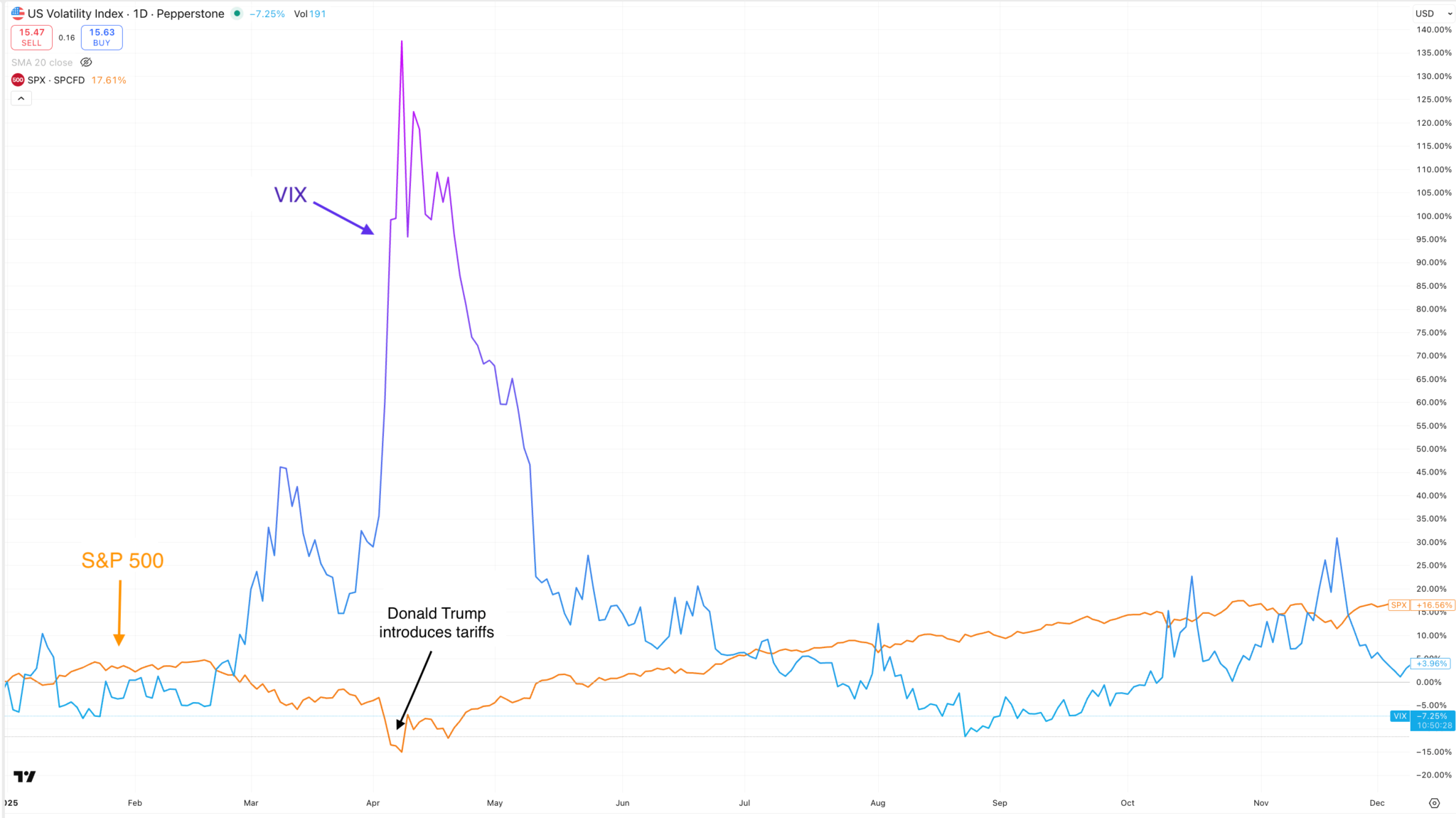
The VIX isn’t a “normal” index like the S&P 500 — it measures expected volatility, not price direction. When investors become nervous, demand for S&P 500 options rises, implied volatility increases, and the VIX typically climbs. When markets calm down, implied volatility falls and the VIX drops.
In practice, the VIX often rises during market sell-offs and major risk events — which is why it’s widely known as a fear gauge. Importantly, it’s forward-looking, reflecting what the options market expects over roughly the next month, not what volatility was in the past.
You can’t buy the VIX directly. Instead, traders gain exposure through derivative or packaged products, depending on the broker and region. The most common options include:
Most VIX traders fall into one of two groups:
When markets drop hard, volatility usually rises. That’s why many investors use VIX products to offset downside risk in equity-heavy portfolios. For example, if your portfolio is mostly US stocks and you expect turbulence, a VIX position may help reduce the impact of a drawdown.
Some traders don’t hedge — they trade volatility itself. VIX spikes can create short-term momentum opportunities, but they also come with sharper moves, wider spreads, and higher execution risk.
Trading the VIX gives traders a direct way to position for changes in market fear, uncertainty, and volatility — often behaving very differently from traditional assets.
Key advantages include:
VIX trading can be effective — but it’s also one of the most misunderstood areas of retail trading, and it comes with unique risks.
Main downsides to understand:
VIX options are often used as defined-risk hedges, because option buyers can cap their maximum loss at the premium paid.
This is one reason VIX options remain popular: they offer a structured way to trade volatility with clearer risk limits than leveraged spot products.
Not all brokers offer the same volatility products — and “VIX trading” can mean very different instruments. Some brokers focus on regulated markets like options and ETFs, while others offer CFDs or synthetic volatility indices.
When choosing a broker in 2026, prioritise the factors that directly affect cost, execution, and risk control:
Start with what you actually want to trade:
Volatility products can be fee-sensitive. Compare:
A strong VIX broker should offer:
VIX trading is tied to macro events and sentiment — good brokers should provide:
Volatility moves fast. Look for:
Trading the VIX can be useful for both speculation and hedging, but volatility products behave differently from standard markets and carry higher risk — especially through options, futures, or leveraged CFDs. The key is choosing a broker that gives you the right VIX product access, transparent costs, stable execution, and strong risk controls. If you’re new to volatility trading, start small, use defined-risk tools, and treat the VIX as a strategic instrument — not a shortcut to fast profits.


Answers to some of the most common questions traders ask about trading the VIX.
The VIX is the CBOE Volatility Index, a measure of expected 30-day volatility in the S&P 500, calculated from SPX options pricing.
Buying VIX options varies slightly by platform, but most brokers follow the same process: search the symbol, open the options chain, choose expiry/strike, and place the order.
VIX trading can be extremely risky, especially through leveraged derivatives. Volatility can spike quickly, spreads can widen, and pricing can behave differently than most traders expect.
No. You can’t buy the index itself — you access it through products like options, futures, ETFs/ETNs, or CFDs.
Many investors buy VIX call options when they expect market stress. If volatility rises during a sell-off, the VIX position can help offset portfolio losses.
The best brokers combine competitive fees, strong derivatives platforms, full options-chain access, stable execution, and solid research tools.
There isn’t one universal “cheapest” broker — total cost depends on commission, spreads, platform fees, and how you trade.
Explore more resources that fellow traders find helpful! Check out these other guides to enhance your forex trading knowledge and skills. Whether you’re searching for the best brokers, educational material, or something more specific, we’ve got you covered:
Compare the best Forex brokers in Malaysia and find the one that suits your trading style and budget.

Regulation is the most important consideration when choosing a broker. Learn how regulators protect traders and how the Forex market is regulated.

Explore the best Forex brokers for beginners in the Malaysia with user-friendly platforms, educational resources, and demo accounts.
60-90% of retail traders lose money trading Forex and CFDs. You should consider whether you understand how CFDs and leveraged trading work and if you can afford the high risk of losing your money. We may receive compensation when you click on links to products we review. Please read our advertising disclosure. By using this website, you agree to our Terms of Service.
Partner Manager and Financial Writer
Head of Content
Financial Writer




Welcome to the FxScouts community! We’re thrilled to have you on board. You’ve successfully signed up for our forex newsletter, where you’ll receive expert insights, market analysis, and the latest news straight to your inbox.
Get ready to stay ahead of the curve with our regular updates designed to help you make informed trading decisions.
Happy trading!
The FxScouts Team