






Beginner? → Avatrade vs XM
Low trading costs? → Tickmill vs FP Markets
Social trading? → Octa vs HFM
MetaTrader? → Pepperstone vs Axi
High leverage? → FBS vs Exness


Select a different country or region to view content tailored to your location.

75-90% of retail traders lose money trading Forex and CFDs. You should consider whether you understand how CFDs and leveraged trading work and if you can afford the high risk of losing your money. We may receive compensation when you click on links to products we review. Please read our advertising disclosure. By using this website, you agree to our Terms of Service.

Chris Cammack is the Partner Manager and a financial writer at FxScouts. Chris builds and maintains our relationships with our partners to provide our users with the best Forex trading experience.

Chris Cammack is the Partner Manager and a financial writer at FxScouts. Chris builds and maintains our relationships with our partners to provide our users with the best Forex trading experience.
Alison Heyerdahl is the Head of Content at FxScouts, a Chartered Market Technician (CMT), and an experienced trader, as well as a financial writer with extensive expertise in Forex trading, broker analysis, and market research. She has reviewed 100+ brokers, publishes weekly YouTube trading videos, and co-hosts the “Let’s Talk Forex” podcast.
If you’ve spent any time watching the XAU/USD chart, you’ll know gold is a different beast. It doesn’t move like EUR/USD, where price can drift for hours. Gold can sit in a tight 2 USD range, then jump 30 USD on a central bank headline or a burst of geopolitical news.
I’ve traded gold through rollover spreads, sudden spikes, and the kind of fast markets where execution matters more than the headline spread. That’s why choosing the right broker matters so much with gold. It’s not just about who advertises the lowest cost, but who can actually give you reliable pricing and fills when the market starts moving hard.
This page answers the questions gold traders actually ask: What will this trade cost me? Which broker handles volatility best? Who offers the tightest real-world spreads?
Trusted. Transparent. Tested.
For over a decade, we’ve set the standard in forex broker reviews—collecting thousands of data points yearly to deliver unbiased, expert-backed insights.
Skip the trial and error! Below, you’ll find the best Malaysian forex brokers for 2026—thoroughly tested, verified, and ranked, so you can trade with confidence.

Swipe to scroll
Broker | Visit Broker Website | Assets Boolean - Gold | Account Name | Trading Cost Raw Spread Account: Total trading cost at the time of last update, for 1 lot of EUR/USD. Includes spread and commission. | Min. Deposit The minimum deposit required to trade using the selected account | Trading Commission | Compare | ||
|---|---|---|---|---|---|---|---|---|---|
 | Yes | Retail | USD 9 | USD 100 | Spread Only | 0.90 pips | |||
 | Yes | XM Ultra Low | USD 1 | USD 5 | Spread Only | 0.60 pips | |||
 | Yes | Zero | USD 7 | USD 0 | 6 USD / lot | 0.10 pips | |||
 | Yes | RAW | USD 6 | AUD 100 | 6 USD / lot | 0 pips | |||
 | Yes | RAW - MetaTrader | USD 7.20 | USD 200 | 7 USD / lot | 0.02 pips | |||
 | Yes | Prime | USD 1.80 | 0 | 0.18 pips | ||||
 | Yes | Raw | USD 7 | USD 100 | 6 USD/lot | 0.10 pips | |||
 | Yes | Zero | USD 4.50 | AUD 0 | 4.5 USD/lot | 0 pips |








Select another broker to another broker to compare features, fees, and platforms side by side.
Quick Forex Broker Finder Tool
Select another broker to another broker to compare features, fees, and platforms side by side.
0.9 pips
ISA, CMA, CBI, FSA-Japan, ASIC, CySEC, FSCA
USD 100
AvaOptions, Avatrade Social, MT5, MT4
400:1
AvaTrade is a globally regulated broker, which gives Malaysian traders confidence when trading gold CFDs, especially when compared to less established offshore providers.
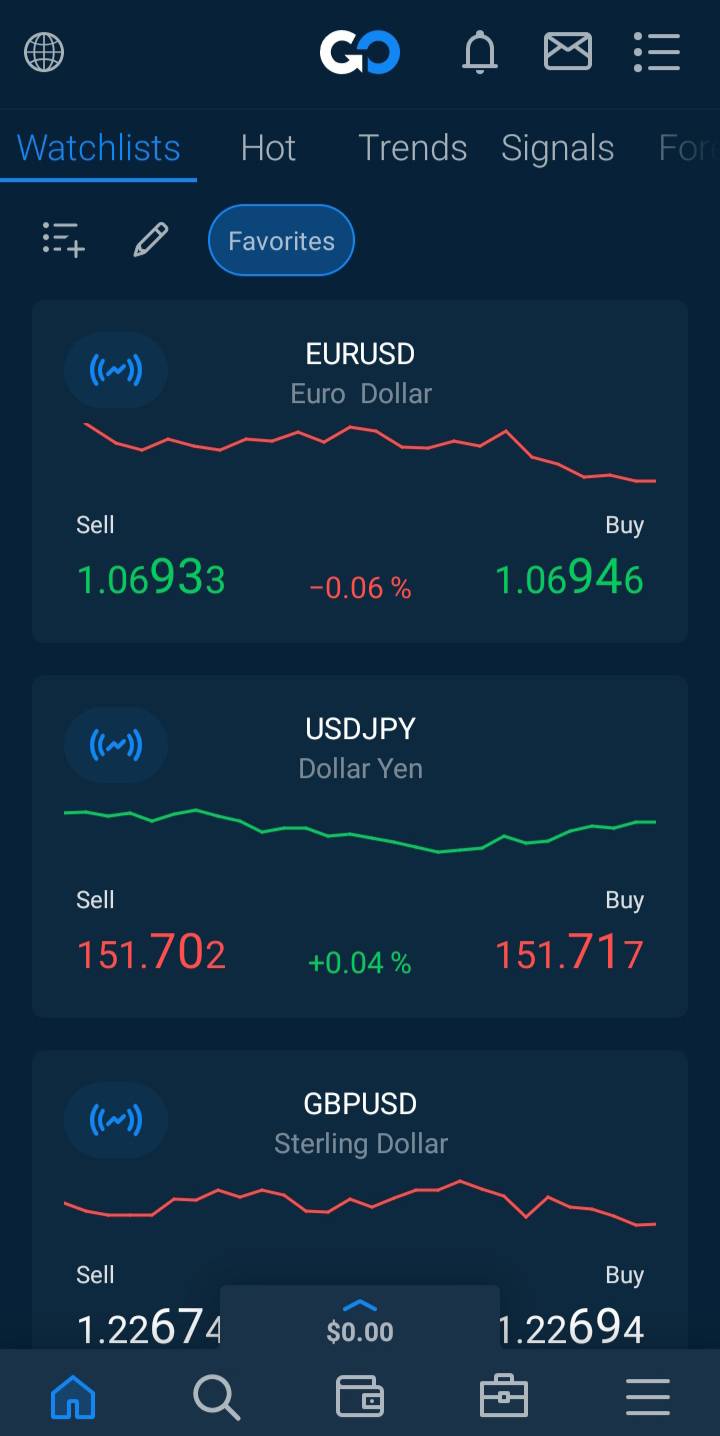
AvaTrade is particularly appealing for traders who want a simple entry into gold trading, with a clean interface and straightforward access to XAU/USD on multiple platforms.
The AvaTrade mobile app is one of its key strengths, allowing Malaysian traders to monitor and trade gold easily during volatile market conditions.
Traders can access MT4, MT5, WebTrader, and the AvaTrade app, giving flexibility without overwhelming users with too many advanced features.
AvaTrade’s spread-based pricing is easy to understand, making it a good option for traders who prefer simplicity over complex commission structures.
Traders looking for ultra-tight spreads and raw pricing for scalping gold may find AvaTrade less competitive than execution-focused brokers.
While solid overall, AvaTrade does not offer the same level of advanced tools or platform depth as some competitors.
AvaTrade | Best for: Simple and mobile-friendly gold trading

FxScouts
 YouTube

Select another broker to another broker to compare features, fees, and platforms side by side.

0.6 pips
FSC, DFSA, CySEC, ASIC
USD 5
MT5, MT4
1000:1
XM is popular in Malaysia due to its low minimum deposit requirements and easy account setup, making it ideal for traders starting with smaller capital.
XM offers competitive trading conditions on gold CFDs, with reliable execution and consistent spreads on XAU/USD.
XM provides webinars, tutorials, and market analysis, which is particularly useful for beginners learning how to trade gold.
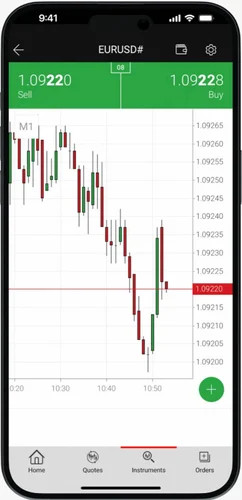
The broker offers stable access to MT4 and MT5, ensuring traders can analyse and execute gold trades efficiently.
XM is known for responsive customer service, which is helpful for traders who may need assistance during volatile trading sessions.
While reliable, XM’s spreads on gold are not always as tight as those offered by more execution-focused brokers.
XM does not offer cTrader or TradingView integration, which may be a drawback for more advanced traders.
XM | Best for: Low minimum deposits and beginner traders
FxScouts
YouTube

Select another broker to another broker to compare features, fees, and platforms side by side.
0.0 pips
CMA, FSA-Seychelles, FSC, FCA, FSCA
USD 0
HFM Trading App, MT5, MT4
1000:1
HFM has built a strong presence in Malaysia, offering a trading environment that suits both beginners and more experienced traders.
The broker offers reliable access to gold CFDs, with competitive spreads and fast execution on XAU/USD.
HFM provides market analysis, trading tools, and educational resources that help traders understand gold price movements.
Malaysian traders can choose from different account structures, allowing them to match their trading style and experience level.
The broker supports various deposit and withdrawal methods, making it practical for Malaysian users.
While competitive, HFM may not offer the tightest spreads for high-frequency gold traders.
The broker focuses mainly on MT4 and MT5, which may not satisfy traders looking for more advanced platform integrations.
HFM | Best for: Balanced trading with strong support
FxScouts
YouTube


Select another broker to another broker to compare features, fees, and platforms side by side.
0.0 pips
CMA, FSA-Seychelles, FSC, FSCA, ASIC
USD 100
TradingView, MT5, cTrader, MT4
500:1
FP Markets offers tight spreads and fast execution, making it well suited for traders focusing on short-term movements in gold.
The broker supports MT4, MT5, cTrader, and TradingView, which gives Malaysian traders flexibility in how they analyse and trade gold.
FP Markets is built for traders who prioritise execution speed and pricing efficiency, particularly in volatile markets like gold.
Traders can easily diversify beyond gold into other CFDs, making it suitable for broader trading strategies.
The broker supports various deposit options, making it accessible for Malaysian traders.
The platform range and pricing structure may feel complex for new traders.
Traders need to understand execution models and platform differences to fully benefit.
FP Markets | Best for: Advanced trading and low-cost execution
FxScouts
YouTube
Select another broker to another broker to compare features, fees, and platforms side by side.
0.1 pips
CMA, FSA-Seychelles, ASIC, CySEC
USD 200
TradingView, MT5, cTrader, MT4
500:1
IC Markets is known for its low spreads and raw pricing model, making it highly attractive for traders who frequently trade gold CFDs.
The broker delivers fast execution, which is critical when trading gold during volatile market conditions.
IC Markets supports MT4, MT5, and cTrader, providing flexibility for traders who rely on technical analysis and automation.
Its trading conditions make it particularly attractive for scalpers and high-frequency traders.
IC Markets is built for performance, with stable platforms and strong liquidity access.
The broker is designed for experienced traders, and beginners may find the setup less intuitive.
Compared to some competitors, IC Markets offers less structured educational content.
IC Markets | Best for: Ultra-tight spreads and high-frequency trading
FxScouts
YouTube
Select another broker to another broker to compare features, fees, and platforms side by side.
In my experience, most traders focus so much on finding the “perfect” entry that they completely ignore the costs that eat away at their accounts from the inside out. Understanding your gold trading costs isn’t just knowing the spread; it’s about knowing how much of your profit is being siphoned off by the broker before you even exit the trade.
When I’m vetting a broker for XAU/USD, I break the costs down into three distinct categories:
Let’s look at some real numbers. Suppose we’re trading a standard lot (1.00 lot) of gold. Here is how the math works out between two different broker styles.
(Position opened and closed within the same day – no swap fees applied)
(Position held overnight – swap fees included using AvaTrade swap rate: −0.0264%)
Assuming gold price ≈ $2,000:
Overnight swap ≈ $53.00
When trading gold, the type of account you choose directly impacts your overall costs. The key difference comes down to how the broker charges you.
When to keep it standard: If you’re just testing the waters with tiny positions (below 0.1 lots) or you only trade once or twice a month, the simplicity of a standard account is fine. But for anyone serious about gold, Raw is the way to go.
With a standard account, you pay more upfront in the spread, whether the market is active or not.
With a raw account, you pay a transparent commission but benefit from tighter pricing, which usually results in lower total trading costs over time, especially on instruments like gold, where spreads can fluctuate significantly.
If you’ve ever been in a trade when a geopolitical headline hits, you know the feeling: your heart sinks, and the chart starts jumping 5 USD at a time. This is where you find out how much your trading costs affect your profitability.
The type of broker you use plays a role:
The Real Danger: Slippage. I’ve had trades where I clicked “Close” at $4,040 and got filled at $4,037. That $3 gap is slippage. It happens because the market moved faster than the order could be processed. In my experience, you have to treat slippage as an unavoidable cost of trading news (which is why I don’t trade the news).
Normal Market Hours:
High-Impact News (CPI, FOMC, NFP):
During these periods, price can move so quickly that your order is filled at the next available price, not the price you clicked.
Weekend Gaps & Rollover:
Gold is particularly sensitive to geopolitical and macroeconomic news. If a major event happens on a Sunday, gold can gap by $20. If your stop loss was in that $20 gap, it won’t be triggered until the market opens, meaning you could lose significantly more than you planned.
I’ve learned the hard way that “cheap” isn’t always “good.” If a broker has low commissions but their servers are located in a basement in the middle of nowhere, you’ll lose more on execution delay than you save on fees.
ECN brokers with low-latency pricing feeds can execute your trades faster, reducing the risk of slippage. Latency simply means the time it takes for your order to travel from your platform to the broker’s server and into the market.
That is why I look for brokers with servers co-located in London (LD4) or New York (NY4).
Why? Because that’s where the big banks are. If your order has to travel halfway across the world, gold will have moved by the time your “Buy” order arrives. You want execution speed under 20 milliseconds. If it’s slower than that, slippage will eat your profits.
A broker’s liquidity pool is its network of banks (Tier-1 liquidity providers include JPMorgan or Citi).
In my experience, the more “Liquidity Providers” (LPs) a broker has, the better. A deep order book means that even if you’re trading 10 lots of gold, there’s someone on the other side to take the trade without the price jumping away from you.
To assess this, you often need to review the broker’s order execution policy or terms and conditions, where they may disclose how their liquidity is sourced.
Good execution is only part of the equation. Strong risk controls are just as important.
You should look for brokers that offer:


Find quick answers to the most common questions traders ask about gold (XAU/USD), from spreads and lot sizes to trading platforms and hidden fees.
XAU/USD represents the price of one troy ounce of gold in US dollars. It’s the most liquid precious metals CFD, with 24-hour trading availability.
The spread on gold (XAU/USD) typically ranges from 0.1 to 0.5 USD on Raw or ECN accounts, and from 0.5 to 1.5 USD on Standard accounts, depending on market volatility and the broker.
Raw or ECN accounts generally offer tighter spreads with a small commission per trade, while Standard accounts include all costs in the spread, making them simpler but slightly more expensive for active traders.
To calculate the spread cost, multiply the spread (in pips) by the pip value per lot and the number of lots traded.
Example:
If the spread is $0.50 and you trade 1 lot (100 ounces), the cost is:
0.50 × 100 = $50 per trade (the cost to open and close the position).
This shows how even small spread differences can add up, especially for frequent traders.
One standard lot of XAU/USD equals 100 troy ounces of gold. At $2,000/oz, one lot represents $200,000 in notional value. Each pip movement = $10 profit/loss.
On MetaTrader platforms, 1 standard lot of gold (XAU/USD) equals 100 troy ounces of gold.
If gold is trading at $2,000 per ounce, then:
1 lot = 100 × $2,000 = $200,000 notional value.
The pip value (0.01 price movement) equals $1 per lot.
A move from 2000.00 to 2001.00 equals 100 pips, or $100 per standard lot.
Brokers also allow mini lots (0.1 lot = 10 ounces) and micro lots (0.01 lot = 1 ounce), which make gold trading accessible to smaller accounts.
Most brokers set the minimum trade size at 0.01 lots, equivalent to 1 troy ounce of gold.
This allows traders to start small, test strategies, and manage risk before increasing position size.
The most widely used platforms for gold trading are MetaTrader 4 (MT4), MetaTrader 5 (MT5), cTrader, and TradingView.
MT4/MT5: Ideal for CFD traders who use Expert Advisors (EAs) and technical indicators.
cTrader: Favoured by professional traders for its market depth and fast execution.
TradingView: Excellent for advanced charting, social trading, and trade analysis.
Choose a platform that offers real-time pricing, advanced order types, price alerts, and a stable mobile app — especially if you plan to trade actively or react to global economic news.
Yes. While XAU/USD (gold vs US dollar) is the most common pair, some brokers also offer XAU/EUR, XAU/GBP, XAU/AUD, and other crosses.
These pairs can be useful if you want to express a view on both gold and the counter-currency, but liquidity is usually lower and spreads are wider than on XAU/USD.
Beyond spreads and commissions, traders should monitor:
Gold spreads widen during:
Swap fees vary by broker and market conditions:
Explore more resources that fellow traders find helpful! Check out these other guides to enhance your forex trading knowledge and skills. Whether you’re searching for the best brokers, educational material, or something more specific, we’ve got you covered:

Compare the best Forex brokers in Malaysia and find the one that suits your trading style and budget.

Regulation is the most important consideration when choosing a broker. Learn how regulators protect traders and how the Forex market is regulated.

Explore the best Forex brokers for beginners in the Malaysia with user-friendly platforms, educational resources, and demo accounts.
60-90% of retail traders lose money trading Forex and CFDs. You should consider whether you understand how CFDs and leveraged trading work and if you can afford the high risk of losing your money. We may receive compensation when you click on links to products we review. Please read our advertising disclosure. By using this website, you agree to our Terms of Service.
Partner Manager and Financial Writer
Head of Content
Financial Writer



Welcome to the FxScouts community! We’re thrilled to have you on board. You’ve successfully signed up for our forex newsletter, where you’ll receive expert insights, market analysis, and the latest news straight to your inbox.
Get ready to stay ahead of the curve with our regular updates designed to help you make informed trading decisions.
Happy trading!
The FxScouts Team