







- Find the best broker for your trading needs
- Compare spreads, fees, and platforms
- Read in-depth reviews and analysis


Select a different country or region to view content tailored to your location.

75-90% of retail traders lose money trading Forex and CFDs. You should consider whether you understand how CFDs and leveraged trading work and if you can afford the high risk of losing your money. We may receive compensation when you click on links to products we review. Please read our advertising disclosure. By using this website, you agree to our Terms of Service.

Alison Heyerdahl is the Head of Content at FxScouts, a Chartered Market Technician (CMT), and an experienced trader, as well as a financial writer with extensive expertise in Forex trading, broker analysis, and market research. She has reviewed 100+ brokers, publishes weekly YouTube trading videos, and co-hosts the “Let’s Talk Forex” podcast.

Alison Heyerdahl is the Head of Content at FxScouts, a Chartered Market Technician (CMT), and an experienced trader, as well as a financial writer with extensive expertise in Forex trading, broker analysis, and market research. She has reviewed 100+ brokers, publishes weekly YouTube trading videos, and co-hosts the “Let’s Talk Forex” podcast.
Chris Cammack is the Partner Manager and a financial writer at FxScouts. Chris builds and maintains our relationships with our partners to provide our users with the best Forex trading experience.
MetaTrader 4 refuses to die — and honestly, I don’t think it should. After years of running EAs, testing execution during London open, and comparing brokers under real market conditions, I’ve learned that MT4 still does one thing exceptionally well: it gets out of the trader’s way.
And once you’ve traded long enough, you stop caring about flashy interfaces and start caring about execution quality, spread stability, VPS reliability, and whether your EA behaves the same live as it did in testing. Because the truth is, MT4 is only half the story—the broker behind it is what really determines the trading experience.
Trusted. Transparent. Tested.
For over a decade, we’ve set the standard in forex broker reviews—collecting thousands of data points yearly to deliver unbiased, expert-backed insights.
Skip the trial and error! Below, you’ll find the best Malaysian forex brokers for 2026—thoroughly tested, verified, and ranked, so you can trade with confidence.

Swipe to scroll
Broker | Official Site | Regulated By | Website Language: English | Support Language: English | Compare | |||||
|---|---|---|---|---|---|---|---|---|---|---|
 | USD 0 | 1000:1 |      | 1230 | 53 | Yes | Yes | |||
 | USD 100 | 400:1 |       | 930 | 63 | Yes | Yes | |||
 | USD 5 | 1000:1 |  | 1554 | 57 | Yes | Yes | |||
 | USD 200 | 500:1 | | 1744 | 64 | Yes | Yes | |||
 | USD 0 | 200:1 |     | 19295 | 80 | Yes | Yes | |||
 | USD 100 | 500:1 | | 612 | 62 | Yes | Yes | |||
 | USD 100 | 500:1 | | 10162 | 70 | Yes | Yes | |||
 | AUD 0 | 500:1 |  | 247 | 81 | Yes | Yes | |||
 | USD 0 | 500:1 | | 26137 | 70 | Yes | Yes | |||
 | USD 10 | 1000:1 | | 2193 | 49 | Yes | Yes |












Select another broker to another broker to compare features, fees, and platforms side by side.
Find Your Ideal Forex Broker
Select another broker to another broker to compare features, fees, and platforms side by side.
0.0 pips
CMA, FSA-Seychelles, FSC, FCA, FSCA
USD 0
HFM Trading App, MT5, MT4
1000:1
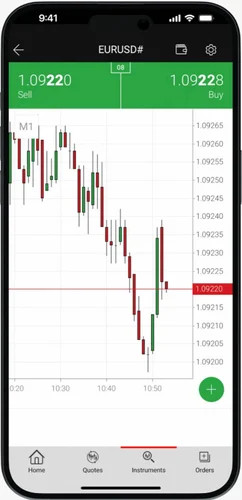
HFM offers the MT4 platform on desktop (Windows, Mac, Linux), web terminal and mobile (iOS & Android) for Malaysian clients, giving access to advanced charting, EAs, indicators and cross-device synchronization.
Through MT4 at HFM Malaysian entity you can trade forex, metals, indices, commodities and CFDs on a large list of instruments (250+) — meaning Malaysians using MT4 are not locked into limited pairs.
HFM’s account range (Cent, Premium, Zero) is compatible with MT4 and offers leverage up to 1:2000 in some cases, making it attractive for those using MT4 to its full potential.
Although MT4 is global, HFM in Malaysia backs its service with local payment methods (Malaysian banks, e-wallets) and Bahasa Malaysia support, reducing friction for MT4 traders based in Malaysia.
While MT4 is powerful, some newer instrument types (e.g., ETFs, DMA stocks) are only available via MT5 or HFM’s own platform, meaning MT4 users may miss out on the latest asset classes.
HFM serves Malaysian clients through international entities rather than a locally licensed Malaysian branch under the Securities Commission Malaysia. For MT4 traders this means the same offshore regulatory conditions apply — worth noting if local oversight is a priority.
HFM | Best for: Traders who want a range low-cost MT4 accounts with Malaysian customer support and funding options

FxScouts
 YouTube


Select another broker to another broker to compare features, fees, and platforms side by side.

0.9 pips
ISA, CMA, CBI, FSA-Japan, ASIC, CySEC, FSCA
USD 100
AvaOptions, Avatrade Social, MT5, MT4
400:1
Unlike variable-spread brokers, AvaTrade offers stable, fixed spreads—ideal for cost prediction.
Unique feature to protect trades from losses for a small fee—exclusive to AvaTrade clients.
Attractive promotions for new Malaysian MT4 users depending on deposit tiers.
Supports MT4 social trading via copy trading platforms—ideal for passive investors.
Fixed spreads mean higher cost during low volatility vs. ECN brokers.
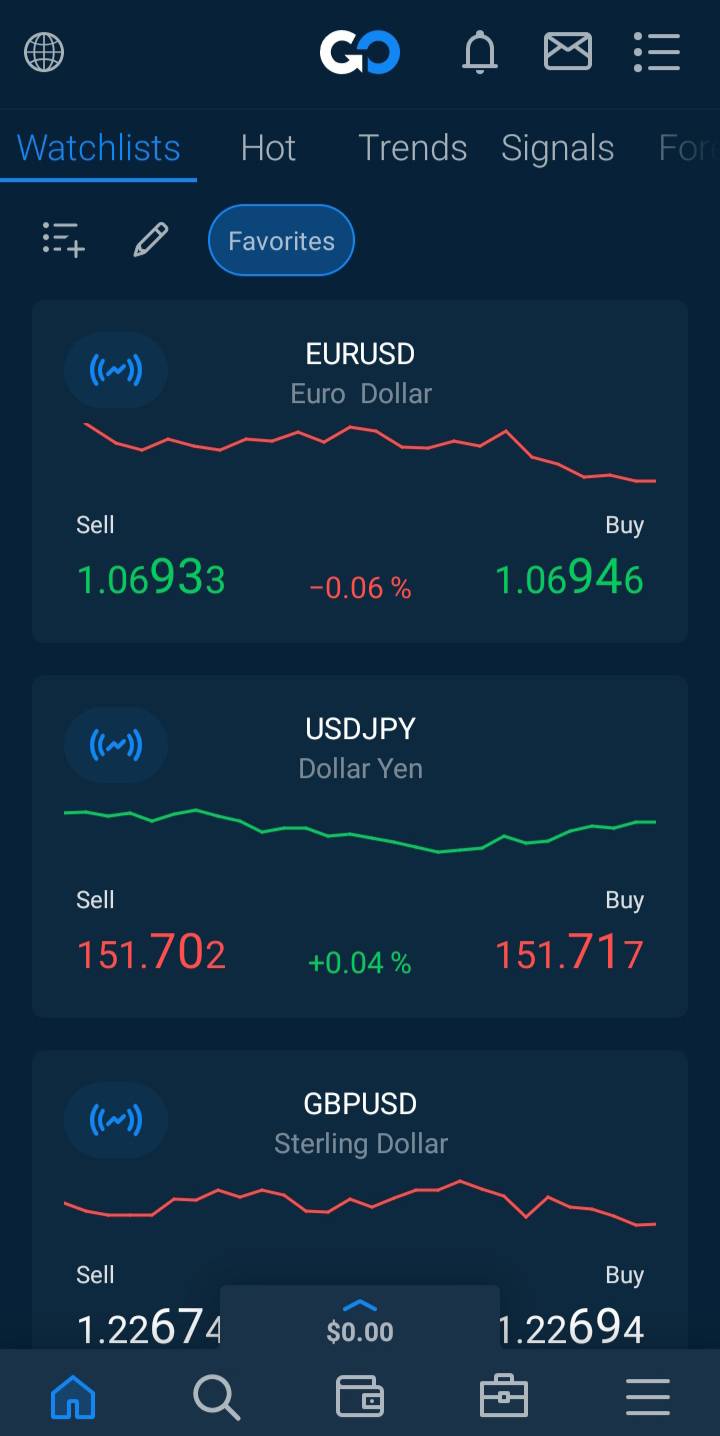
Only usable via AvaTradeGO mobile or web-based platforms.
AvaTrade | Best for: Beginners and social traders in Malaysia who want MT4 access with fixed spreads and bonus options
FxScouts
YouTube

Select another broker to another broker to compare features, fees, and platforms side by side.
0.6 pips
FSC, DFSA, CySEC, ASIC
USD 5
MT5, MT4
1000:1
Trade as low as 0.01 lots—ideal for risk-averse Malaysian beginners.
New traders can try live MT4 trading without committing funds upfront.
Includes Bahasa Malaysia education sessions—rare among top brokers.
Seamless transition between MT4 and MT5 without opening new accounts.
No proprietary EA marketplace or API for automation lovers.
Not all e-wallet withdrawals are free—check local options.
XM | Best for: Malaysian MT4 users who want multilingual education, bonus perks, and micro trading options
FxScouts
YouTube

Select another broker to another broker to compare features, fees, and platforms side by side.
0.1 pips
CMA, FSA-Seychelles, ASIC, CySEC
USD 200
TradingView, MT5, cTrader, MT4
500:1
Spreads from 0.0 pips with $3.5 commission per lot—ideal for scalpers and algo traders.
Deep order book liquidity makes execution smooth even on volatile pairs.
Supports expert advisors (EAs) with latency as low as 1ms from top VPS providers.
IC Markets focuses on professional execution over beginner incentives.
Regulated by ASIC and CySEC, but no LFSA license.
IC Markets | Best for: Professional Malaysian MT4 traders seeking ECN execution, raw spreads, and high-frequency strategies
FxScouts
YouTube
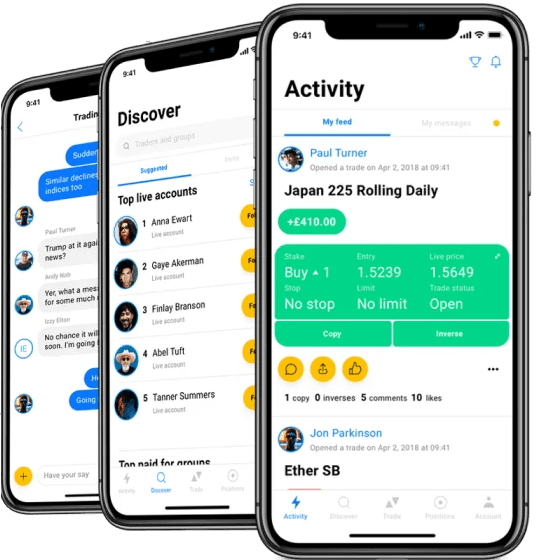
Select another broker to another broker to compare features, fees, and platforms side by side.
0.6 pips
BMA, CFTC, FINMA, FMA, BaFin, DFSA, FSA-Japan, MAS, ASIC, FSCA, FCA
USD 0
TradingView, L2 Dealer, MT4
200:1
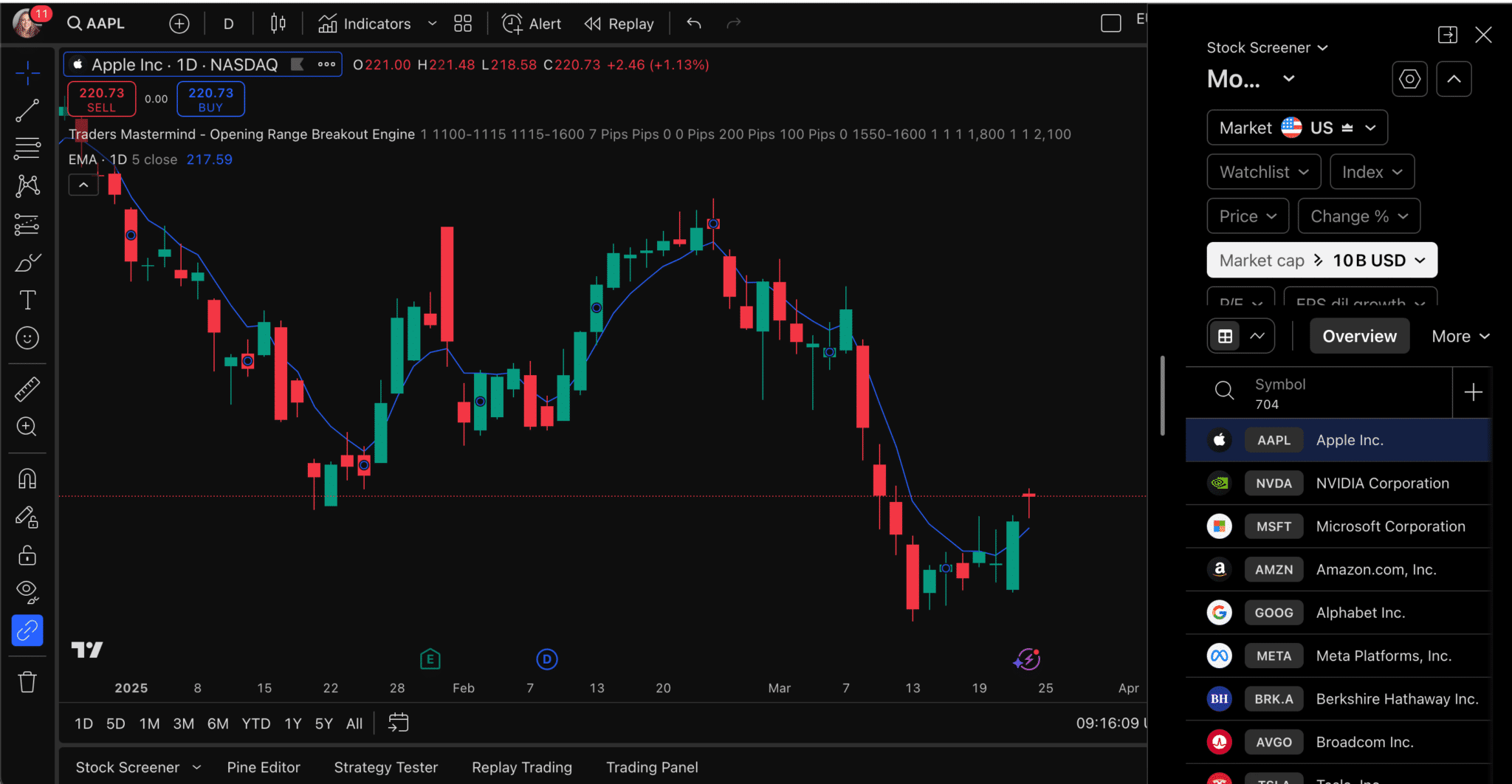
IG offers a fully equipped MT4 environment, including 18 free advanced indicators and expert advisors (EAs), plus one-click trading, mini terminal, and real-time news — ideal for Malaysian traders who want more than just the default platform setup.
IG provides institutional-grade execution on MT4 with no dealing desk intervention. Malaysian clients benefit from low latency, minimal slippage, and reliable trade fills, especially during high-impact events.
IG is authorised by the UK’s Financial Conduct Authority (FCA) and offers robust fund security measures. While not under Malaysia’s SC, Malaysian traders get access to one of the safest global MT4 brokers.
IG’s MT4 platform includes access to 80+ FX pairs, gold, silver, oil and some major indices via CFDs — covering the key markets Malaysian traders focus on most.
IG offers a dedicated MT4 demo with £10,000 in virtual funds and access to the same tools as the live version, allowing new users in Malaysia to learn the platform risk-free.
While IG has a broad offering overall, the MT4 platform only supports a portion of the broker’s full asset list — you won’t find shares or more niche markets on MT4.
IG operates for Malaysian clients under FCA or international licensing. This means no local SC investor protection or ring-fenced Malaysian accounts.

IG | Best for: Malaysian traders looking for a trusted, FCA-regulated MT4 broker with stable execution, advanced tools, and institutional-grade support
FxScouts
YouTube
Select another broker to another broker to compare features, fees, and platforms side by side.
MetaTrader 4 launched in 2005. It is older than the iPhone, yet it still has more active retail Forex traders than almost any platform that has come after it.
There are good reasons for that.
MT4 is no longer the most advanced option. MT5 has more order types, faster backtesting, an integrated economic calendar, and depth-of-market features that MT4 simply does not offer.
But traders do not stay loyal to a platform because it looks better on paper. They stay with what fits the way they trade.
That is where MT4 still has an edge. The MQL4 ecosystem is massive, with years of indicators, scripts, EAs, and custom tools behind it. When I was testing simple trading ideas, MT4 always felt easy to work with because there was already a forum thread, code sample, or workaround for almost everything.
Familiarity matters too. Traders know their chart layouts, templates, hotkeys, and routines. Many prop firm challenges, signal services, and copy trading systems still run on MT4, so switching is not just a platform upgrade. It means rebuilding a workflow.
That, more than anything, is why MT4 has lasted. Not because it is newer, but because, for many traders, it is still the easiest platform to use every day.
It’s easy to dismiss MT4 as “old,” but in my experience, its longevity is its greatest strength. Here is why I still keep an MT4 terminal running 24/5:
If you want to trade like a pro on MT4, you need to understand the “under the hood” mechanics:
Many people think an EA is a “money printer.” In my experience, even the best EA will fail if your broker has a “bad bridge.” A bridge is the software that connects your MT4 terminal to the broker’s liquidity providers. If that bridge is slow, your EA will get poor fills. Always test a new EA on a “Raw Spread” account first to see how it handles real market conditions.
If you are running an EA, a VPS isn’t a luxury—it’s a necessity. I have found running a bot on home Wi-Fi is a recipe for disaster. Home connections can add up to 400ms of latency; in a fast market, that’s an eternity.
The goal is sub-1ms latency. If you use a VPS provider like Beeks or Vultr in the same data centre as your broker (New York or London), your execution becomes near-instant.
MetaQuotes (the creators of MT4) occasionally pushes “Build” updates. I know from painful experience that these can sometimes break custom indicators. I always recommend backing up your templates and MQL4 folders every weekend. If a Monday morning update breaks your charts, you’ll be glad you have the backup.
This question comes up constantly, and the honest answer is more nuanced than most people want to hear. Here’s how I’d frame it. MetaQuotes — the company behind both platforms — has made no secret of wanting to shelve MT4. They stopped selling new MT4 server licences to brokers in 2020. Some brokers have already transitioned their new clients to MT5 as a default. But the market has refused to follow the plan. MT4 user numbers remain enormous, and brokers that have tried to force migration have faced significant pushback.
Here’s my honest position after years of using both: MT5 is objectively more capable, but MT4 is practically more useful for most retail traders right now. That tension is real, and I don’t think it resolves neatly. Let me break down where each platform wins.
| Feature / Consideration | MT4 | MT5 | Winner |
|---|---|---|---|
| EA ecosystem (community) | Decades of battle-tested code, enormous library | Growing, but still catching up | MT4 |
| Backtesting engine | Single-threaded, slower, MQL4-limited | Multi-threaded, faster, more accurate tick data | MT5 |
| Order types | 4 pending orders | 6 pending orders including Buy/Sell Stop Limit | MT5 |
| Netting vs hedging | Hedging natively supported | Both modes available (account-level setting) | Tie |
| Prop firm compatibility | Dominant standard across prop firms | Growing adoption but not universal | MT4 |
| Market depth (DOM) | Not available | Full depth-of-market built in | MT5 |
| Asset class support | Forex and CFDs primarily | Forex, stocks, options, futures, CFDs | MT5 |
| EA migration from MQL4 | Native | Requires rewrite (not backward compatible) | MT4 |
| Long-term platform viability | No new broker licences since 2020 | Active development, MetaQuotes-backed future | MT5 |
| Copy trading / signals | Mature, well-established networks | Available but smaller community | MT4 |
My practical recommendation: if your EAs are already built and profitable in MQL4, stay on MT4 for now. The migration cost — both in development time and in recalibrating EA parameters against a different backtesting engine — is real and can introduce new problems. If you’re starting fresh in 2026 and plan to build long-term, learning MQL5 and MT5 is the more future-proof path. Both platforms are well-supported by the brokers on this list.
Most guides treat MT4 like it’s the market itself. It isn’t. MT4 is just the interface—the “remote control.” When you click a button, your order travels through several software layers before hitting a bank.
In my experience, the most critical layer is the Bridge. This is the software that connects the broker’s server to the liquidity providers. A high-quality bridge means sub-millisecond internal latency; a cheap one means your order hangs during high volatility.
| Broker | Bridge Tech | Why It Matters |
|---|---|---|
| IC Markets | OneZero | Uses the OneZero “Liquidity Hub” to aggregate pricing from dozens of banks. |
| Pepperstone | OneZero | Powers their “Razor” accounts with ultra-low latency in Equinix NY4/LD4 data centers. |
| FP Markets | OneZero | Utilises OneZero for robust Direct Market Access (DMA) and ECN pricing models. |
| Tickmill | PrimeXM | Uses PrimeXM XCore to achieve some of the fastest retail execution speeds globally. |
| Axi | OneZero | Institutional-grade pricing bridged directly to their retail MT4 environment. |
When evaluating an MT4 broker, consider these critical factors:


Find quick answers to the most common questions traders ask about the MT4 platform and its features.
This is the #1 question I get. MetaQuotes (the developer) hasn’t sold new licenses to brokers for years, but in my experience, MT4 isn’t going anywhere. Because the MQL4 coding language is incompatible with MT5, there are literally millions of custom indicators and EAs that only work on MT4. Brokers know that if they force a migration, they’ll lose half their client base overnight. It’s the “Windows XP” of trading—it’s old, but it’s too essential to die.
Technically, you can download the generic version from MetaQuotes to practice charting, but you can’t execute trades. In my experience, it’s better to just open a “Demo Account” with a broker like IC Markets or Pepperstone. It gives you the real price feed of that specific broker, which is much more accurate than the generic “MetaQuotes-Demo” server.
Almost all, but there’s a catch. In my experience, some EAs are sensitive to “Suffixes.” For example, if your broker calls the Euro EURUSD.raw instead of EURUSD, some poorly coded EAs will fail to recognize the pair. Always check if your broker uses standard naming conventions or if your EA allows for custom symbol suffixes.
Yes, but MT4 was originally built specifically for Forex. While brokers have “hacked” it to support Gold, Oil, and Indices, in my experience, the platform starts to feel clunky if you try to trade hundreds of stocks or obscure cryptos. If you’re a pure FX and Gold trader, MT4 is perfect. If you want a massive portfolio of global stocks, that’s the one time I’d suggest looking at MT5.
While the platform itself is free, brokers usually require a minimum to open an account. In my experience, you’ll see “cent accounts” with a $10 minimum (like Exness), but for a professional raw spread setup, you should expect to put down $200. Anything less and the commissions on a Raw account will eat your margin too quickly.
Yes. MT4 fully supports automated trading through Expert Advisors (EAs). You can download or purchase EAs or build your own using MQL4. Always test EAs on a demo account first.
Yes. MT4 is widely available on Android and via WebTrader. Mobile MT4 is ideal for monitoring and managing trades, while the desktop platform is better for analysis and automated trading.
Explore more resources that fellow traders find helpful! Check out these other guides to enhance your forex trading knowledge and skills. Whether you’re searching for the best brokers, educational material, or something more specific, we’ve got you covered:

Compare the best Forex brokers in Malaysia and find the one that suits your trading style and budget.

Regulation is the most important consideration when choosing a broker. Learn how regulators protect traders and how the Forex market is regulated.

Explore the best Forex brokers for beginners in the Malaysia with user-friendly platforms, educational resources, and demo accounts.
60-90% of retail traders lose money trading Forex and CFDs. You should consider whether you understand how CFDs and leveraged trading work and if you can afford the high risk of losing your money. We may receive compensation when you click on links to products we review. Please read our advertising disclosure. By using this website, you agree to our Terms of Service.
Partner Manager and Financial Writer
Head of Content
Financial Writer




Welcome to the FxScouts community! We’re thrilled to have you on board. You’ve successfully signed up for our forex newsletter, where you’ll receive expert insights, market analysis, and the latest news straight to your inbox.
Get ready to stay ahead of the curve with our regular updates designed to help you make informed trading decisions.
Happy trading!
The FxScouts Team