






Compare Forex Brokers!
Compare top Forex brokers side-by-side and find the best fit for your trading needs. Start your comparison now!
Alison Heyerdahl
Edited by
Author
Alison Heyerdahl
Edited by
Alison Heyerdahl
Head of Content

Alison Heyerdahl is the Head of Content at FxScouts, a Chartered Market Technician (CMT), and an experienced trader, as well as a financial writer with extensive expertise in Forex trading, broker analysis, and market research. She has reviewed 100+ brokers, publishes weekly YouTube trading videos, and co-hosts the “Let’s Talk Forex” podcast.


Learn more about Alison Heyerdahl
Author
Author
Chris Cammack
Partner Manager and Financial Writer

Chris Cammack is the Partner Manager and a financial writer at FxScouts. Chris builds and maintains our relationships with our partners to provide our users with the best Forex trading experience.

Learn more about Chris Cammack

Forex Trading - A Beginner's Guide

Reading time: 17 min | Beginner Education | Home Page Popular Articles | Others Also Viewed

What is Forex Trading?

Forex trading—short for foreign exchange or FX—is the process of exchanging one currency for another. Used by companies, financial institutions, and investment funds to facilitate commerce, hedge risk, and seek returns, Forex trading is also accessible to individuals via online brokers. Retail traders buy and sell currency pairs, aiming to profit from movements in exchange rates.

How does the Forex market work?

The Forex market is the world’s largest and most liquid financial market, with average daily turnover near USD 9.6 trillion (April 2025), according to the latest BIS triennial survey reported by Reuters. Trading takes place over-the-counter (OTC) through a global network of banks, dealers, and electronic platforms, rather than on a centralised exchange.

A trader buys a currency at the current market price and later sells it at a target price (or sells first and buys back later). Because exchange rates fluctuate constantly, the difference between entry and exit prices results in a profit or loss.

Although the Forex market operates 24 hours a day, five days a week, volatility tends to be higher during regular business hours in major financial centres across Asia–Pacific, Europe, and the Americas—and especially during overlaps between sessions (e.g., when North American and European markets are active).

Retail access is provided by Forex brokers, who offer platforms, pricing, and market connectivity so traders can analyse markets and place orders.

Forex Trading Hours in London

The only way for retail traders to access this international market is via an intermediary called a Forex broker. A Forex broker will provide the trading software and market access for their clients, so a trader can do market research and buy and sell currencies. Here are the best brokers for beginner traders. 

Editor’s note: Broker availability, leverage limits, and protections vary by country/region. Choose a broker authorised by a recognised regulator in your jurisdiction (or a reputable international regulator), compare trading costs (spreads/commissions), platform options (e.g., MT4/MT5/cTrader), education, and customer support. If your site uses a country/region filter, surface the correct local options here.

Best Forex Brokers for Beginners in 2026 (10)

We’ve ranked the top Forex brokers for beginners, based on real testing, fee analysis, platform ease of use and customer support.


Min. Deposit

USD 0
AvaTrade
4.59
Read Review

Our broker ratings are derived from rigorous testing by industry experts and experienced traders. We thoroughly evaluate regulatory compliance, security, transparency, trading performance, and customer service. We never accept payment for higher scores, ensuring our ratings remain unbiased, factual, and trustworthy—so you can confidently choose a reliable broker for your financial safety and trading success.

For detailed information about our testing methodology click here.

Min. Deposit
The minimum amount of money required to open an account with this broker.
USD 100
Unlimited Demo
No
Support Hours
24/5
Trading Cost
Total trading cost at the time of last update, for 1 lot of EUR/USD using the account with the lowest minimum deposit. Includes spread and commission.
USD 9
Regulated
regulatorregulatorregulatorregulatorregulatorregulatorregulator
Website Language: English
Yes
Support Language: English
Yes
XTB
4.49
Read Review

Our broker ratings are derived from rigorous testing by industry experts and experienced traders. We thoroughly evaluate regulatory compliance, security, transparency, trading performance, and customer service. We never accept payment for higher scores, ensuring our ratings remain unbiased, factual, and trustworthy—so you can confidently choose a reliable broker for your financial safety and trading success.

For detailed information about our testing methodology click here.

Min. Deposit
The minimum amount of money required to open an account with this broker.
USD 0
Unlimited Demo
No
Support Hours
24/5
Trading Cost
Total trading cost at the time of last update, for 1 lot of EUR/USD using the account with the lowest minimum deposit. Includes spread and commission.
USD 7
Regulated
regulatorregulatorregulatorregulator
Website Language: English
Yes
Support Language: English
Yes
HFM
4.43
Read Review

Our broker ratings are derived from rigorous testing by industry experts and experienced traders. We thoroughly evaluate regulatory compliance, security, transparency, trading performance, and customer service. We never accept payment for higher scores, ensuring our ratings remain unbiased, factual, and trustworthy—so you can confidently choose a reliable broker for your financial safety and trading success.

For detailed information about our testing methodology click here.

Min. Deposit
The minimum amount of money required to open an account with this broker.
USD 0
Unlimited Demo
Yes
Support Hours
24/5
Trading Cost
Total trading cost at the time of last update, for 1 lot of EUR/USD using the account with the lowest minimum deposit. Includes spread and commission.
USD 10
Regulated
regulatorregulatorregulatorregulatorregulator
Website Language: English
Yes
Support Language: English
Yes
XM
4.45
Read Review

Our broker ratings are derived from rigorous testing by industry experts and experienced traders. We thoroughly evaluate regulatory compliance, security, transparency, trading performance, and customer service. We never accept payment for higher scores, ensuring our ratings remain unbiased, factual, and trustworthy—so you can confidently choose a reliable broker for your financial safety and trading success.

For detailed information about our testing methodology click here.

Min. Deposit
The minimum amount of money required to open an account with this broker.
USD 5
Unlimited Demo
No
Support Hours
24/5
Trading Cost
Total trading cost at the time of last update, for 1 lot of EUR/USD using the account with the lowest minimum deposit. Includes spread and commission.
USD 6
Regulated
regulatorregulatorregulatorregulator
Website Language: English
Yes
Support Language: English
Yes
Pepperstone
4.71
Read Review

Our broker ratings are derived from rigorous testing by industry experts and experienced traders. We thoroughly evaluate regulatory compliance, security, transparency, trading performance, and customer service. We never accept payment for higher scores, ensuring our ratings remain unbiased, factual, and trustworthy—so you can confidently choose a reliable broker for your financial safety and trading success.

For detailed information about our testing methodology click here.

Min. Deposit
The minimum amount of money required to open an account with this broker.
USD 0
Unlimited Demo
No
Support Hours
24/7
Trading Cost
Total trading cost at the time of last update, for 1 lot of EUR/USD using the account with the lowest minimum deposit. Includes spread and commission.
USD 7
Regulated
regulatorregulatorregulatorregulatorregulatorregulatorregulator
Website Language: English
Yes
Support Language: English
Yes
Tickmill
4.58
Read Review

Our broker ratings are derived from rigorous testing by industry experts and experienced traders. We thoroughly evaluate regulatory compliance, security, transparency, trading performance, and customer service. We never accept payment for higher scores, ensuring our ratings remain unbiased, factual, and trustworthy—so you can confidently choose a reliable broker for your financial safety and trading success.

For detailed information about our testing methodology click here.

Min. Deposit
The minimum amount of money required to open an account with this broker.
USD 100
Unlimited Demo
Yes
Support Hours
24/5
Trading Cost
Total trading cost at the time of last update, for 1 lot of EUR/USD using the account with the lowest minimum deposit. Includes spread and commission.
USD 6
Regulated
regulatorregulatorregulatorregulatorregulator
Website Language: English
Yes
Support Language: English
Yes
Exness
4.32
Read Review

Our broker ratings are derived from rigorous testing by industry experts and experienced traders. We thoroughly evaluate regulatory compliance, security, transparency, trading performance, and customer service. We never accept payment for higher scores, ensuring our ratings remain unbiased, factual, and trustworthy—so you can confidently choose a reliable broker for your financial safety and trading success.

For detailed information about our testing methodology click here.

Min. Deposit
The minimum amount of money required to open an account with this broker.
USD 3
Unlimited Demo
No
Support Hours
24/7
Trading Cost
Total trading cost at the time of last update, for 1 lot of EUR/USD using the account with the lowest minimum deposit. Includes spread and commission.
USD 7
Regulated
regulatorregulatorregulatorregulatorregulatorregulator
Website Language: English
Yes
Support Language: English
Yes
IG
4.69
Read Review

Our broker ratings are derived from rigorous testing by industry experts and experienced traders. We thoroughly evaluate regulatory compliance, security, transparency, trading performance, and customer service. We never accept payment for higher scores, ensuring our ratings remain unbiased, factual, and trustworthy—so you can confidently choose a reliable broker for your financial safety and trading success.

For detailed information about our testing methodology click here.

Min. Deposit
The minimum amount of money required to open an account with this broker.
USD 0
Unlimited Demo
Yes
Support Hours
24/5
Trading Cost
Total trading cost at the time of last update, for 1 lot of EUR/USD using the account with the lowest minimum deposit. Includes spread and commission.
USD 6
Regulated
regulatorregulatorregulatorregulatorregulatorregulatorregulatorregulatorregulatorregulatorregulator
Website Language: English
Yes
Support Language: English
Yes
FP Markets
4.60
Read Review

Our broker ratings are derived from rigorous testing by industry experts and experienced traders. We thoroughly evaluate regulatory compliance, security, transparency, trading performance, and customer service. We never accept payment for higher scores, ensuring our ratings remain unbiased, factual, and trustworthy—so you can confidently choose a reliable broker for your financial safety and trading success.

For detailed information about our testing methodology click here.

Min. Deposit
The minimum amount of money required to open an account with this broker.
USD 100
Unlimited Demo
Yes
Support Hours
24/5
Trading Cost
Total trading cost at the time of last update, for 1 lot of EUR/USD using the account with the lowest minimum deposit. Includes spread and commission.
USD 6
Regulated
regulatorregulatorregulatorregulatorregulator
Website Language: English
Yes
Support Language: English
Yes
CMC Markets
4.53
Read Review

Our broker ratings are derived from rigorous testing by industry experts and experienced traders. We thoroughly evaluate regulatory compliance, security, transparency, trading performance, and customer service. We never accept payment for higher scores, ensuring our ratings remain unbiased, factual, and trustworthy—so you can confidently choose a reliable broker for your financial safety and trading success.

For detailed information about our testing methodology click here.

Min. Deposit
The minimum amount of money required to open an account with this broker.
USD 5
Unlimited Demo
Yes
Support Hours
24/5
Trading Cost
Total trading cost at the time of last update, for 1 lot of EUR/USD using the account with the lowest minimum deposit. Includes spread and commission.
USD 7
Regulated
regulatorregulatorregulatorregulatorregulator
Website Language: English
Yes
Support Language: English
Yes

Advantages of Forex Trading

For many newcomers, the appeal of Forex is its mix of flexibility and reach. You’re not tied to a single exchange or a narrow trading session; instead, you can participate in a truly global market from almost anywhere. That accessibility is a major draw, but it’s worth understanding exactly what that means in practice.

  • Accessibility: You can trade online from most countries using a computer or mobile device. Opening an account is usually straightforward, and modern platforms make it easy to analyse charts, place orders, and manage risk from a single interface.
  • 24/5 market: There is almost always an active session somewhere in the world. As trading moves from Asia–Pacific to Europe and then to North America, liquidity ebbs and flows—creating windows of opportunity for different trading styles and schedules.
  • Leverage: Brokers commonly offer leverage, allowing smaller deposits to control larger positions. (Leverage magnifies both gains and losses.) Used sensibly, leverage can make small, incremental moves meaningful; used carelessly, it can wipe out an account.
  • Go long or short: It is straightforward to trade rising or falling markets. Because every currency trade involves buying one currency and selling another, you can position for strength or weakness with equal ease—no special permissions required.
  • Low starting capital: Many brokers allow small minimum deposits for entry-level accounts. This lowers the barrier to entry, but it doesn’t remove the need for a plan, risk controls, and patience.

Disadvantages of Forex Trading

Balanced against those advantages are risks that every trader should take seriously. Forex is not a shortcut to easy money; it is a competitive marketplace where preparation and discipline matter more than enthusiasm. Many beginners lose money precisely because they underestimate these risks.

Forex trading involves substantial risk, and many beginners lose money. Profitable trading requires skill, education, discipline, and risk control. Key risks include:

  • Leverage risk: Losses can be amplified; poor risk management can quickly deplete capital. Even small price moves against you are costly when positions are highly leveraged.
  • Market volatility: Prices can move sharply on economic data, central bank decisions, or geopolitical events. Sudden gaps or fast markets can lead to slippage between your intended exit and the actual fill.
  • Counterparty/operational risk: Weakly regulated or untrustworthy brokers can expose traders to unfair practices. Checking a broker’s regulatory status, client-fund protections, and track record is essential.
  • Costs: Spreads, commissions, swaps, and withdrawal fees can erode returns. These expenses matter even more for high-frequency strategies or very small accounts.

Time and focus: Consistent results require study, a plan, and emotional control. Without a routine—research, execution, review—it’s difficult to improve or even to know whether your strategy works.

Bottom line: The same features that make Forex attractive—leverage, round-the-clock access, and ease of entry—also make it easy to take unnecessary risks. Treat it like a professional activity from day one.

Tips for Beginner Forex Traders

Before we get into the detail of how to trade Forex, here are some quick tips for beginner traders:

  • Understanding how the Forex market works is essential. Without education, Forex trading is just gambling.
  • Always use a demo account before you start trading with your own money
  • Take courses on technical analysis, data analysis and market economics.
  • If you are going to spend a lot of time trading a single currency pair, learn what moves that currency pair's price and when these price changes happen.
  • Always use a reputable and regulated Forex broker. Be sure to read the client contract terms and fine print.
  • Be aware that most bonuses offered by Forex brokers cannot be withdrawn. These can only be used to supplement your trading account.
  • Make sure that your chosen Forex broker offers negative balance protection. Without negative balance protection, you may end up owing your broker money after a heavy loss.
  • Develop a trading strategy and test it with a demo account before you try it in the live market.
  • Think carefully about how much money you want to put in your trading account. Never use more than you can afford to lose.
  • Only ever risk a small percentage of your account balance at a time. Even if your trading strategy has a 70% win rate, if you risk a quarter of your money with every trade it only takes a small run of bad luck to wipe your account out.
  • Use a stop-loss. It's better to lose a small amount and try again tomorrow than lose everything.
  • All Forex traders lose money, even professionals. When you make a losing trade don't lose your discipline or discard your trading strategy. Consistency is essential. 

Important Forex Trading Terms

  • Pips: Pip stands for “Point in percentage”. In Forex trading, pips represent the fourth decimal place of a currency pair, except for the Japanese Yen where the pip represents the second decimal place. Pips are a unit of measure used to analyse price changes in a financial asset. The term is commonly used across all financial markets as a standard unit of measurement.
  • Spread: The spread is the difference between the purchase price and the sale price of a financial asset and is measured in pips (see above). In Forex trading, the spread can be fixed or variable with variable spreads being more common.
  • Lots: Lots are a standard unit for measuring trade volume in Forex trading. 1 lot represents 100,000 units of a currency pair: 1 lot of EUR/USD is €100,000 of the pair. One mini lot is 10,000 units of a pair and a micro lot is 1000 units of the pair.
  • Margin: Your margin is your deposit made to hold open positions. It is a portion of your account capital that is held in reserve, like a deposit, representing a percentage of the total value of your trades.
  • Leverage: Leverage is a term used by investors and traders to describe borrowing money from a broker to open a larger position in the market. With leverage, Forex traders can open positions many hundreds of times larger than the value of their capital. While leverage will amplify gains, it all also amplifies losses and needs to be managed carefully.
  • Negative Balance Protection: This is a form of insurance. With leveraged trading, a bad loss can send your trading account negative. In this case, the trader will owe the broker the negative balance. 
  • Major Pairs: The major pairs are the most traded currency pairs in the world. There are 7 major currency pairs:
      • EUR/USD (Euro/United States dollar) – the most traded pair
      • USD/JPY (United States dollar/Japanese yen)
      • GBP/USD (Great British Pound/United States dollar)
      • AUD/USD (Australian dollar/United States dollar)
      • USD/CAD (United States dollar/Canadian dollar)
      • USD/CHF (United States dollar/Swiss franc)
      • NZD/USD (New Zealand dollar/United States dollar
  • CFDs: CFD is an acronym for Contract for Difference. CFDs are derivative instruments in which the value of the instrument is based on an underlying asset.  When trading CFDs (whether Forex, indices, commodities or shares) neither the CFD broker nor the trader ever own the underlying asset.

Also check out our Forex Glossary if you want more definitions of Forex terminology.

How to Trade the Forex Market

A Forex trade has four main components – the asset, the size of the trade, the price, and the direction (buy or sell). Each of these is unique and affects the profitability of the trade.

The Asset: Currency pairs

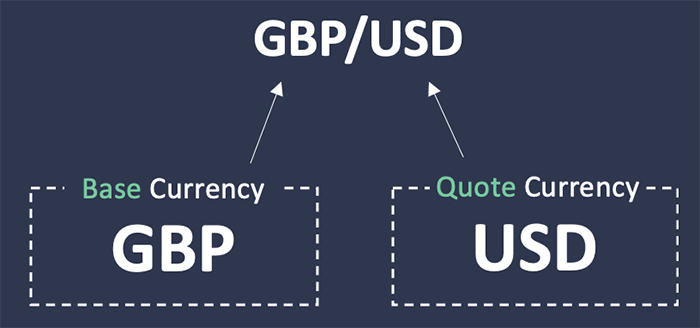
In Forex trading, the asset is always a set of two currencies called a currency pair. Currencies are quoted in pairs, as the two currencies in a pair are bought and sold simultaneously. An example pair is the EUR/USD (euro/U.S. dollar).
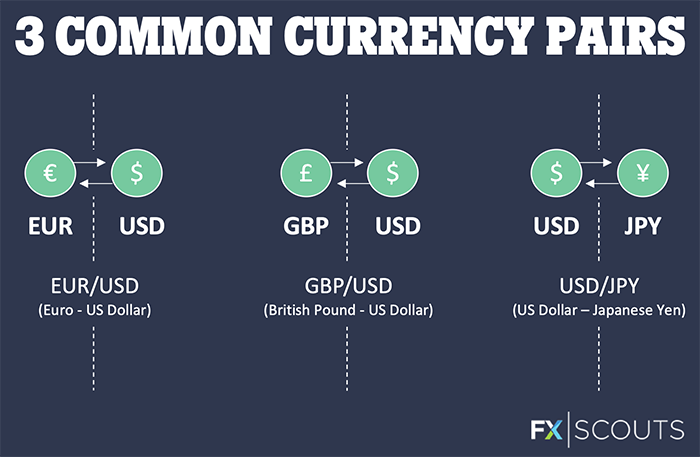
The first currency of any pair is called the base currency and the second currency is called the quote currency. In the GBP/USD, the British Pound is the base currency and the US Dollar is the quote currency.
The price: Forex quotes

The value of a currency is called a quote or a price. As currencies are quoted in pairs, the value of the quote currency is set in relation to the base currency.

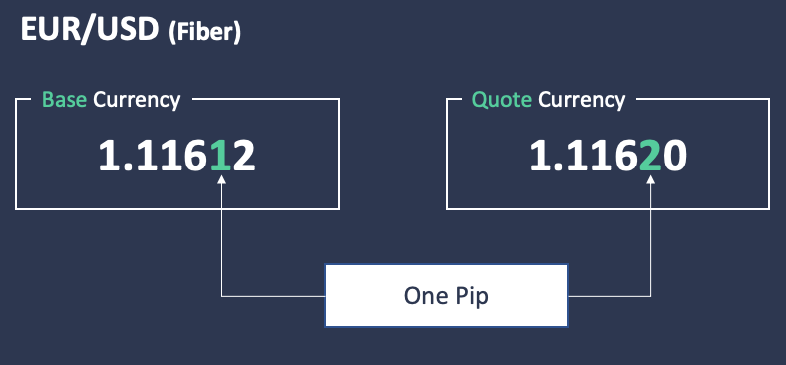
For example, if the EUR/USD is priced at 1.1332, it means that 1 euro can be exchanged for 1.1332 US dollars. In Forex trading, the change in price of one currency relative to another is what generates a profit or loss.
Forex Quotes

Pips: Calculating price fluctuation

Price fluctuation (or the difference between two prices) is often measured and expressed as a value in pips. A pip is a small change in the value of a pair and is measured in the 4th decimal place; for example, if the EUR/USD trades at 1.1332, a one pip price increase would move the exchange rate to 1.1333.

There are exceptions to this rule, the most notable being Japanese yen quote pairs, such as USD/JPY, where a pip is a change in the 2nd decimal place.

Quotes and Spreads: Ask price, bid price and trading costs

The value of a currency pair is expressed using a two-price quotation system: One price is for buying – or going long – and is called the ask price, this will be slightly above the market price. The other price is for selling – or going short – and is called the bid price, this will be slightly below the market price. The prices are set by your broker and the difference between the two is called the spread.

It’s best to see the spread as a broker’s fee for using its trading platform. The spread is measured in pips and is often the largest component of your trading costs. The spread is typically different for each currency pair and is influenced by factors like the pair’s liquidity, the broker’s mark-up and the broker type. Some brokers offer very tight spreads, often based on the raw interbank rate, and in these cases you will pay commission on every trade.

Here is an example of a 1-pip spread on the EUR/USD pair:

  • Bid price:1.1332
  • Ask price:1.1333

The ask price minus the bid price = 0.0001 = 1 pip.

Trade size: Lots, mini lots, micro lots and nano lots

The size or volume of a trade is measured in lots. This is similar to how stocks (equities) are measured in shares and gold, which is measured in ounces.

forex-lots

One standard lot is 100,000 units of a currency pair. So, if you buy one standard lot of the EUR/USD, you’re entering a trade worth 100,000 euro (which is more than USD 100,000).

One mini lot is 10,000 units of a pair. A mini lot of the EUR/USD is worth 10,000 euro.

One micro lot is 1,000 units of a pair. A micro lot of the EUR/USD is worth 1000 euro. In most cases, a micro lot is in most cases the smallest trade you can place, though some brokers will offer nano lots of for smaller account types.

If you don’t know how to calculate the correct lot size for your trades or if you need help in calculating the pip-value for a certain lot size, take a look at How to Place My First Forex Trade.

Leverage: Amplifying exposure but increasing risk

Trading with leverage involves borrowing money from a liquidity provider to greatly increase the size of your trade. A trader will place a small deposit, known as the margin, and the rest of the trade value will be leverage. Your profit or loss will be based on the full value of the trade, not just your margin.

Most CFDs are traded with leverage because they allow traders to open much larger positions than their account balance would normally allow.
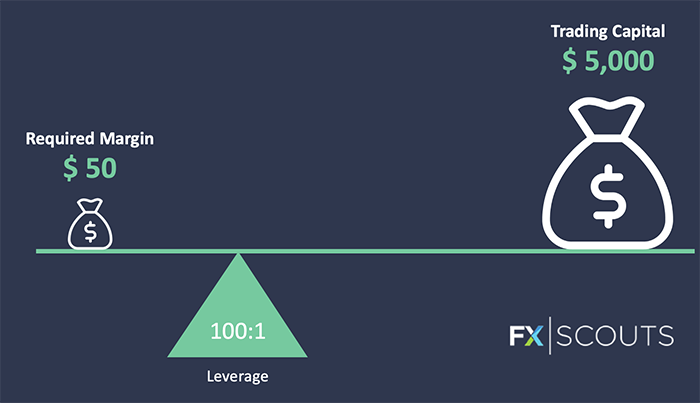
Using high leverage can increase your profit potential considerably but will also considerably increase your risk. Traders who use excessive leverage are exposing themselves to significant losses.

Here is an example to demonstrate how leverage can be used to place larger trades with less capital:

Let’s say you have a small trading account of USD 100. You have access to leverage of 1:500. You place a trade of 0.1 lots (one mini lot) on the USD/JPY pair. One mini lot is 10,000 units of the pair, which means the value of your trade is USD 10,000. Although the notional value of the trade is USD 10,000, only USD 20 of your account is engaged in opening the trade because 1:500 leverage means that you need to put down only 0.2%* of the notional amount of the trade.

*This example doesn’t consider the extra margin required to sustain a position with a floating loss.

Trade direction: Going long or going short

We mentioned going long and going short earlier, but let's look at what we mean in more detail.

CFD traders can speculate on whether an asset will increase or decrease in value and can profit either way.  Profiting from the decreasing value of an asset is unique to CFD trading.
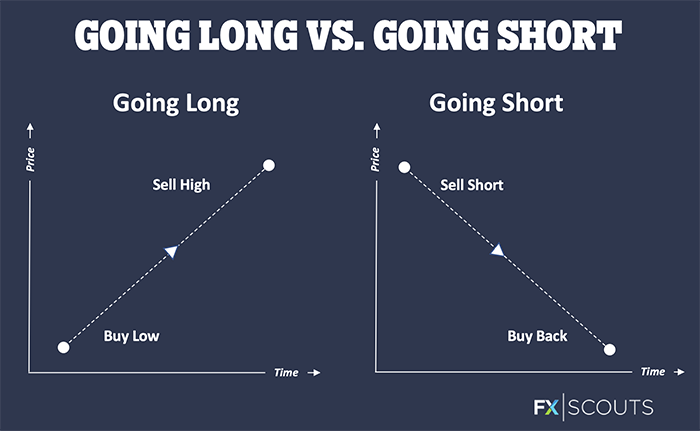
Long is the term used for buying, where the trader speculates that the price of the base currency will rise relative to the quote currency. In simple terms, you will make money from a long (buy) position if the price of the currency pair rises.

Short is the term for selling, where the trader speculates that the price of the base currency will fall relative to the quote currency. In simple terms, you will make money from a short (sell) position if the price of the currency pair declines.

Example – trading 1 micro lot on the EUR/USD 

Let’s say your trading account is funded with USD 1000 and your account’s leverage is 1:100. The EUR/USD currency pair is trading at 1.20000. You speculate that the EUR will increase in value against the USD and you buy 1 micro lot at 1.20000. You set a stop loss at 1.19000 (100 pips below your entry price) and a take profit at 1.23000 (300 pips above your entry price). One micro lot (0.01 lots) is worth EUR 1,000, which is equivalent to USD 1200 in this scenario. As your account’s leverage is 1:100, only USD 12 of your account is used to open the position*.

*Extra margin is required to sustain a floating loss.

If your trade is correct

The euro strengthens against the U.S. dollar and hits your profit target at 1.23000. The 1000 euro you initially bought for USD 1200 is sold for USD 1230, which means you’ve made a profit of USD 30.

Another way to calculate your profit is to multiply the number of pips you’ve made by the pip value of a micro lot, which is USD 0.10 on the EUR/USD. So, 300 pips multiplied by USD 0.10 gives you a profit of USD 30.

If your trade goes wrong

The euro weakens against the U.S. dollar and hits your stop loss at 1.19000. The 1000 euro you initially bought for USD 1200 is sold for USD 1190, which means you’ve lost USD 10 on the trade.

Another way to calculate your loss is to multiply the number of pips you’ve made by the pip value of a micro lot, which is USD 0.10 on the EUR/USD. So, 100 pips multiplied by USD 0.10 gives you a loss of USD 10.

What is a Forex Trading Platform?

Some beginners assume that a Forex trading platform (also "trading platform" or "Forex platform" or just "platform") is the same thing as a Forex broker. This is not true. Forex trading platforms are the software used to make trades, whereas Forex brokers are the companies that connect trading platforms to the Forex market.
Which is the Best Forex Trading Platform?

MT4-MT5-cTrader

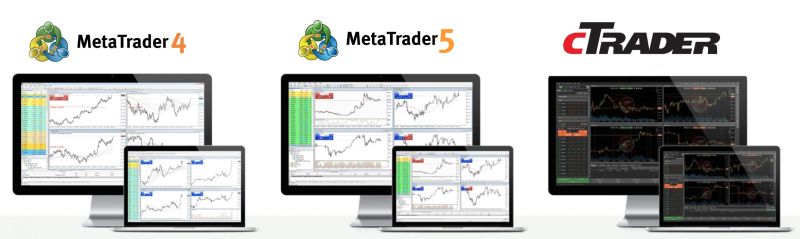
Many traders believe that MetaTrader 4 (MT4) is the best trading platform because it is the most popular. Some traders think that MetaTrader 5 (MT5) is the best because it is newer and has more functions. Some traders think that cTrader is the best because it is easy-to-use but is very customisable. 

Some Forex brokers also have their own platforms. They are usually web-based and are better suited to beginner traders as they have a simplified interface and fewer customisation options. The main problem with a broker's own trading platform is that it can only be used with that one broker, whereas MT4, MT5 and cTrader can be used with many different Forex brokers. 

MetaTrader 4

Metatrader 4 (MT4) is the most popular Forex trading platform in the world and is supported by most Forex brokers. It is a third-party trading platform, which means that traders can use the same MT4 platform with different Forex brokers. 

  • MT4 is a high-speed and customisable trading platform, complete with a charting suite where charts can be overlaid with indicators from MT4’s library. 
  • MT4 allows users to build or buy expert advisors (or trading robots) and use them to automate their trading.
  • MT4 is available on mobile, tablet, in a web browser and as a downloadable application.

MetaTrader 5

MetaTrader 5 (MT5) is the most recent version of the MetaTrader Forex trading platform. Unlike the basic version of MT4, MT5 allows trading on exchange-listed assets like stocks and ETFs. Though still not as popular as MT4, MT5 is supported by a growing number of Forex brokers. 

  • MT5 has more features than MT4 and comes with an Economic Calendar, Depth of Market indicator and an embedded chat function,
  • Aso features unlimited chart windows, 80 built-in indicators and 12 more time-frames than MT4.
  • MT5’s new scripting language is a more efficient language for building EAs

Unfortunately, MT5 is not backwards compatible with MT4, so any trading robots made for MT5 will not work in MT4 and vice versa.

cTrader

Launched in 2011, cTrader offers high-speed execution and is easier to use than MT4 and MT5.   Like MT4 and MT5, cTrader is a third party trading platform, so traders can use their version of cTrader with multiple Forex brokers. cTrader Automate also lets traders build trading robots to automate their trading. Other cTrader features are:

  • Detailed trade analysis, including the Analyse Tab, which provides an overview of the performance of your account
  • Advanced platform customisation with cTrader Automate (formerly cAlgo)
  • The ability to add multiple take-profit orders.
  • Comprehensive educational videos available within the platform.

Most Forex brokers who offer cTrader don't make money from the spread and will instead charge a commission per trade. Trading robots built for MT4 and MT5 will not function in cTrader.

Other Forex Trading Platforms

Some Forex brokers (like eToro or XTB) operate their own trading platforms and will not provide support for MT4, MT5 or cTrader. But most brokers with their own trading platforms will also support one of the third-party platforms. Broker's own trading platforms tend to be easier to use for beginner traders as they have fewer functions, less customisability and simpler interfaces.

What Changes Forex Prices?

Like all markets, currency prices are set by supply and demand. But the constant shifts in supply and demand of the dozens of frequently traded currencies makes the Forex market more complex than most. Happily, there a few indicators that traders can use to help them predict price movement.

Central Bank Economic Policy

National economic policy, set by central banks such as the Bank of England in the UK or the Federal Reserve in the USA, can have major effects on currency prices. Following the 2008 crash, some central banks engaged in quantitative easing, or increasing the supply of money in circulation, which causes a currency’s price to drop. On the other hand, raising interest rates (usually used to combat inflation) will cause a currency’s price to increase as this leads to higher investor demand.

If economic policy changes without warning it can create major fluctuations in currency value. In 2015 the Swiss National Bank (SNB) abruptly scrapped the Swiss Franc’s peg to the Euro with no warning. This resulted in a huge increase in the value of the franc versus the euro – moving from 1.2 CHF/EUR to 0.86 within hours of the news.

Current Events

Current events can also affect the price of a currency. Brexit in the United Kingdom is a perfect example: Large investors like to move money into strong, predictable economies; so as Brexit uncertainty continued institutional investors moved their capital out of the country, decreasing demand for the GBP and causing it to lose value. Once it appeared that the British Parliament had successfully agreed on a Brexit deal, the value of the GBP rose again.

You can see this effect anywhere you look in the world, if a good piece of economic news appears about a nation-state, its currency will increase in value. If the news is negative, the currency’s value will decrease. As a rule, the better health a country’s economy is in, the stronger and more stable its currency will be.

Trading Strategy

There are a few common strategies in Forex trading, the strategy that works for you will be dependent on your personality and lifestyle.
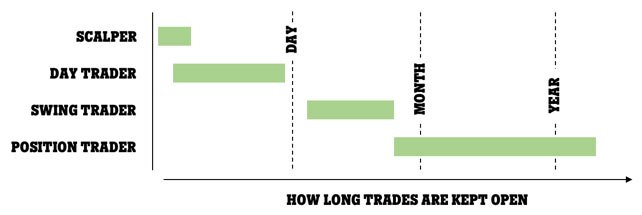
  • Scalping: Scalping is when you open and close trades very quickly in times of very high volatility. The goal is to make lots of small profits over the course of the period of volatility. Scalping can be effective but requires a lot of free time and close attention to detail. 
  • Day Trading: Day traders open and close all their positions in a single day. Each day is treated as a new market. This trading strategy is less time-consuming than scalping but does require the skilful use of stop-loss and take-profits to be profitable.
  • Swing Trading: Swing traders will often keep trades open for days or weeks at a time, making a profit from the general swings in the market. This is even less time-consuming than day trading but requires a good understanding of the normal movements of the currency pair being traded.
  • Position Trading: Position traders keep their trading positions open the longest of all.  This type of trade makes decisions based on economic fundamentals and can keep trades open for months or even years. While position trading is the least time-consuming trading strategy it requires a deep knowledge of global economics and extreme patience. 

How Long Trades Stay Open

All trading strategies will require you to engage in market analysis in order to be successful. Market analysis can be grouped into two general types; fundamental analysis and technical analysis.

Fundamental Analysis

Fundamental analysis is the study of macroeconomic trends and their effects on price, this form of analysis requires a sound knowledge of economics and current events. In the broadest sense, Fundamental traders try to buy currencies from stronger economies at a low price and sell currencies from underperforming economies.

Fundamental traders are often reliant on scheduled news events that alter currency prices. A good example is the Non-Farm Payroll (NFP) report in the United States; the NFP is released on the first Friday of every month and details how many jobs have been added or lost in the US economy. It’s generally seen as a good bellwether of US economic health and if the figure is higher or lower than expected then we will see increased volatility in the Forex market.  

Fundamental analysis can be tough for traders unfamiliar with finance data but for traders who have a firm grasp of the financial news, and understand macroeconomics, this is a very successful approach.

Technical Analysis

Technical analysis is the prediction of future price action based on historical price data. Technical traders make heavy use of charts and will often rely on a variety of tools and indicators to help them identify trends and patterns. Almost all technical analysis is based in Dow Theory, a set of principles laid down in the 19th century by Charles Dow to describe and predict the movement of the stock market.  

The most common form of technical analysis is price action trading, which is essentially the analysis of the actions of all the other market participants. Price action traders believe that market psychology is the main driver of price: They believe that there are many reasons for price movement, but that ultimately, its traders’ reactions to developments.

Technical analysis can be tough to learn, but once you have a good understanding of the basics it can be used in any financial market, not just the Forex market.

Analytical Tools

All good traders will use a combination of fundamental and technical analysis to find opportunities in the Forex market and there are several great tools we recommend to get you started:

  • Autochartist: is a lightweight technical analysis tool that can be plugged directly into your trading platform. It analyses trends in price action and highlights trading opportunities based on automated technical analysis across a huge number of Forex pairs.
  • Trading Central: A more robust analysis database that contains over 8,000 assets, including stocks, commodities and Forex pairings. Analysis, both technical and fundamental, provides data and commentary on each asset.
  • TradingView: An intuitive and advanced trading platform and active social network for traders and investors. In addition, TradingView offers a huge number of HTML5 charts, stock screeners, hundreds of pre-built technical analysis indicators and a built-in news feed.

Whatever form of analysis you focus on, these tools will help you find your feet and do a lot of the hard work for you - especially on the technical side. Once you get to grips with technical analysis you will probably want to start customising your platform with indicators and algorithmic trading bots that can automate your trading strategy.

Conclusion

Some of these terms and concepts might be tricky to understand at first but it won’t take you long to get it when you see it in action. The best way to learn the basics of Forex trading is to practice on a demo account and place a few trades. We still have plenty of good information waiting for you! Take a look at the articles below to further develop your skills and knowledge.

Essential reading

Expect to learn a lot before trading profitably.  You need to learn how to operate the software, do analysis, and manage the risk in the account. We have a Forex Education section as well as a Video Tutorials page so you can continueexploring many of the principles to succeed in trading. Here are the articles most relevant to getting a good start.

Once you have the basics covered, you might also want to check out:

Risk in Forex Trading

Trading CFDs comes with significant risk, and if you are concerned about losing any the money that you are depositing, then don't trade Forex.  Forex trading is not a get rich quick scheme and requires dedication and study.

As a trader, you will need to develop a trading plan, understand risk management, and have a goal with what you want to achieve.  Don't start depositing money until you are sure you want to give this a good shot. Every trader loses trades that they were sure they would win, so expect the unexpected and have a plan for when your trades fail.

Others Also Viewed

Explore more resources that fellow traders find helpful! Check out these other guides to enhance your forex trading knowledge and skills. Whether you’re searching for the best brokers, educational material, or something more specific, we’ve got you covered:

Best Forex Brokers

We’ve tested hundreds of Forex brokers to find the safest, low-cost, and reliable brokers. Compare fees, and features—trade smarter with expert insights!

Beginner featured image

Best Forex Brokers for Beginners in 2026

Explore the best Forex brokers for beginners, with user-friendly platforms, educational resources, and demo accounts.

Best MT4 Forex Brokers

Discover the best MT4 brokers offering reliable execution, advanced charting tools, and custom indicators on MetaTrader 4 for enhanced Forex trading.

Meet the Experts Behind Our Unbiased Reviews

Chris Cammack

Partner Manager and Financial Writer

Chris Cammack
Chris Cammack is partner manager and senior financial writer at FxScouts, specialising in broker relations and forex market analysis. As the former Head of Content (2019–2024), he set editorial standards for all content published at FxScouts, including broker reviews, broker comparison pages and education. With over a decade of experience in editorial management and partner relations, Chris builds and maintains our relationships with our partners to provide the best Forex trading experience for our users. He also co-hosts the “Let’s Talk Forex” podcast with Alison Heyerdahl, where he explores trading strategies, industry news, and macroeconomic trends to help traders navigate the markets with confidence.

Alison Heyerdahl

Head of Content

Alison Heyerdahl
Alison Heyerdahl is the Head of Content at FxScouts, a Chartered Market Technician (CMT), an experienced trader, and a financial writer with extensive hands-on experience in the Forex trading industry. She specialises in Forex trading, broker analysis, and market research, with a focus on helping traders navigate the complex world of online trading safely and confidently. Alison has tested and reviewed more than 100 Forex brokers, assessing everything from regulatory status and trading conditions to platform features and customer support. Her goal is to provide honest, detailed, and practical insights that traders can rely on when choosing a broker. She’s also produced more than 300 educational videos for the FxScouts YouTube channel, where she explains trading concepts in a clear, accessible way. As the co-host of the “Let’s Talk Forex” podcast, Alison shares expert commentary on broker reliability, trading strategies, and market developments—always with a focus on transparency and trader protection.

Stefan de Clerk

Financial Writer

Stefan de Clerk
Stefan is a financial writer and Forex trading enthusiast with over a decade of experience creating in-depth content on finance and technology. His deep interest in geopolitical events, big data, and market sentiment fuels his passion for analyzing how global factors shape financial markets. With a background in marketing and financial research, Stefan believes that Forex trading offers the best insight into the pulse of the world economy. Committed to delivering well-researched, unbiased, and objective information, he helps traders navigate the markets with clarity and confidence.
TRading Journal TRading Journal