







Page Navigation


Select a different country or region to view content tailored to your location.


Alison Heyerdahl is the Head of Content at FxScouts, a Chartered Market Technician (CMT), and an experienced trader, as well as a financial writer with extensive expertise in Forex trading, broker analysis, and market research. She has reviewed 100+ brokers, publishes weekly YouTube trading videos, and co-hosts the “Let’s Talk Forex” podcast.


Although there are over 180 official currencies globally, not all of them are actively traded in the Forex market. In this article we will go through what a currency pair is, the most prevalent currency pairs and essential considerations to take before trading them.
What is a currency pair?
In currency trading, the asset traded is always a set of two currencies called a currency pair, as they are bought and sold at the same time. The first currency in the pair is called the base currency and the second the quote currency. In a currency pair, e.g. EUR/USD the base currency is listed first, to the left (EUR) and the quoted currency is the second, to the right (USD). The base currency represents the current base price and the quote currency the current quote price for the pair.
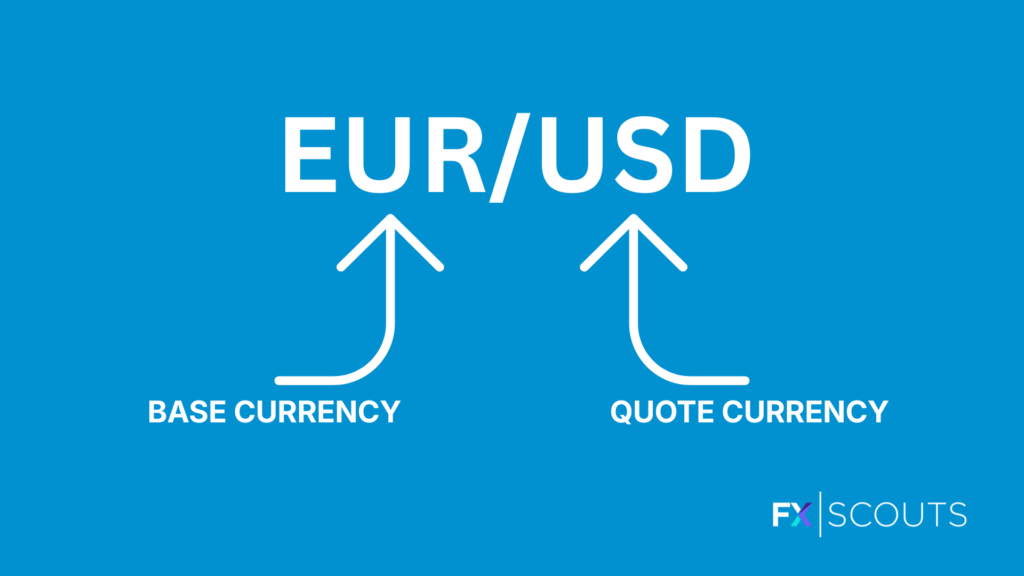
E.g, if the price of EUR/USD is set at 1.1332, it means that 1 euro can be exchanged for 1.1332 dollars, though this price constantly fluctuates. It is this change in the price of one currency relative to another that ultimately generates either a profit or a loss.
Categories of currency pairs
Currency pairs are typically categorised into three distinct groups: “Majors”, “Minors” and “Exotics”.
Majors
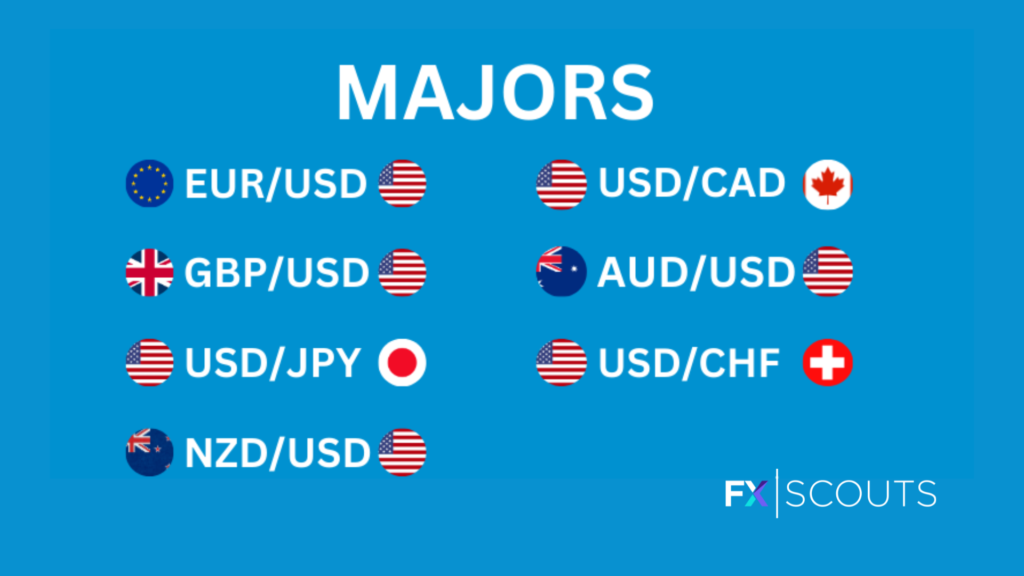
All major currency pairs contains of the US Dollar (USD) and one of the seven other prominent currencies - Euro (EUR), British Pound (GBP), Japanese Yen (JPY), Swiss Franc (CHF), Australian Dollar (AUD), New Zealand dollar (NZD) or Canadian dollar (CAD).
Minors
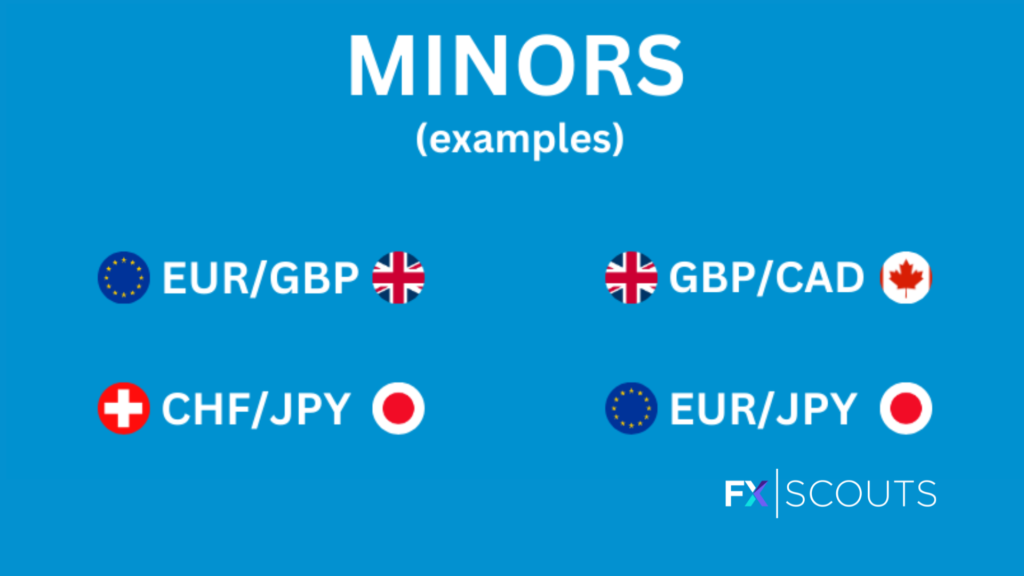
Minor currency pairs, or cross pairs, exclude the USD but still consist of one of the other seven standard currencies mentioned above. The most common of these pairs usually contain either the Euro, the Japanese Yen or the British Pound. See examples below:
Exotics
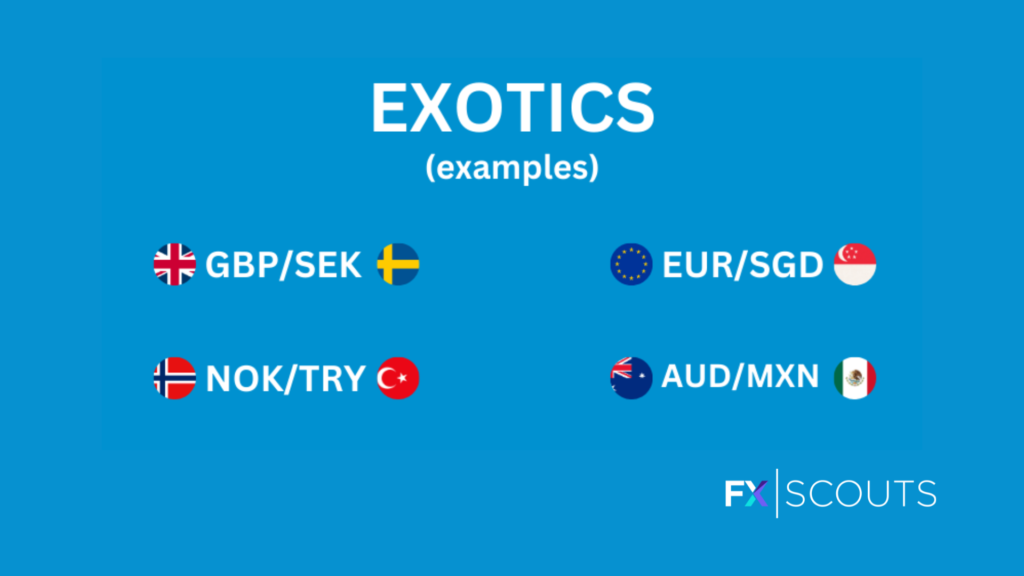
Exotic pairs on the other hand are the combination of one major currency with an exotic, such as GBP/SEK (British Pound/Swedish krona), or simply two exotics, like NOK/TRY (Norwegian krona/Turkish Lire).
How to get started - the 4 most common currency pairs
For beginners, the easiest way to get started is choosing one of the four largest and most common pairs to begin trading: the EUR/USD, USD/JPY, GBP/USD or USD/CHF. The advantages of trading one of these major pairs all stem from the amount of liquidity available which is generated by traders continually buying and selling these currencies.
EUR/USD
The Euro and the US Dollar - EUR/USD, is by far the most traded currency pair, accounting for over 20%* of all transactions in the Forex market. This is due, among other things, to the fact that the United States and the European Union are two of the world's largest economies, which guarantees high popularity and liquidity.
When trading with EUR/USD, it is important to be aware of factors that may affect volatility (variations in price movements). Two institutions that often influence this are the US Federal Reserve (Fed) and the European Central Bank (ECB), e.g. through interest rate decisions or other statements (which you can keep track on with our economic calendar). The time of day also matters, as EUR/USD tends to be in peak activity between when the London Stock Exchange opens at 9:00 AM and the New York Stock Exchange closes around 11:00 PM CET.
USD/JPY
The second largest pair consists of the US dollar and the Japanese yen - USD/JPY. The interesting thing about this pair is the relatively large difference in value, as the Japanese yen is worth much less than the dollar.
Common events that affect USD/JPY price movements include major interest rate announcements from the Bank of Japan and the Federal Reserve, as well as the release of economic data that gauges economic health in both Asia and the US.
Contrary to many other currency pairs, the USD/JPY present excellent trading conditions even during the Asian stock session, typically between 01:00 and 09:00 CET.
GBP/USD
The third most common pair is GBP/USD - the British pound and the US dollar. This pair shares many similarities with the EUR/USD, given the UK's robust economy and extensive interconnections with the EU. The significant economic and political bond between the UK and the US has a long history and GBP/USD currency trading has existed since the US dollar was first printed in 1776, following the US Declaration of Independence.
Since the USD is the counter currency in both the GBP/USD and previously mentioned EUR/USD pairs, this means that both pairs often rise when the dollar is weak and fall when it is strong. But just as with all currency pairs, statements and guidelines from the central banks, the Bank of England (Boe) and the Federal Reserve (Fed), affect price movements in different ways. Also the opening of the London Stock Exchange tends to have a significant impact and usually sets the tone for the rest of the day.
USD/CHF
The fourth and last of the most common currency pairs is the US dollar and the Swiss franc, USD/CHF. Like the USD, the CHF is also considered a "safe" currency, boosting its strength in times of economic uncertainty. The Swiss National Bank (SNB) also often pursues a relatively aggressive monetary policy, which in turn affects the strength of the CHF.
It also means that in low market volatility, the Swiss Franc tends to follow the market movements of the Euro, due to the close economic relationship between Switzerland and the Eurozone, and generally has a negative correlation with EUR/USD and GBP/USD.
Trading USD/CHF is most favorable during the overlap between the US and European exchanges, around 15:30 - 17:30 CET.
Why trade the major currency pairs?
Because of their popularity and high liquidity, the most common currency pairs consistently draw in more trading activity, this reduces the spreads between buying and selling prices and keeps trading costs low. Due to these factors major currency pairs are more heavily traded and volume remains high, especially in comparison to less common pairs, such as exotics.
With this high volume, traders can also easily open and close large positions in the market. In currency pairs with lower volume, it is significantly more difficult to carry out large transactions without it also affecting the price. It also means that there are more traders available willing to buy or sell at a given time, which reduces the risk of "slippage" (a worse price than expected when making a trade).
Explore more resources that fellow traders find helpful! Check out these other guides to enhance your forex trading knowledge and skills. Whether you’re searching for the best brokers, educational material, or something more specific, we’ve got you covered:

Discover how Forex Trading works with our essential guide. Understand key terminology with examples and learn how to make your first successful trade.

We’ve tested hundreds of Forex brokers to find the safest, low-cost, and reliable brokers. Compare fees, and features—trade smarter with expert insights!

Explore the best Forex brokers for beginners, with user-friendly platforms, educational resources, and demo accounts.
Partner Manager and Financial Writer

Head of Content
Financial Writer