





Beginner? → Avatrade vs XM
Low trading costs? → Tickmill vs FP Markets
Social trading? → Octa vs HFM
MetaTrader? → Pepperstone vs Axi
High leverage? → FBS vs Exness
Page Navigation


Select a different country or region to view content tailored to your location.

FxScouts helps traders across the globe by meticulously testing and reviewing online brokers and providing Forex education and market analysis. Our partners compensate us through paid advertising. While partners may pay to provide offers or be featured, they cannot pay to alter our recommendations, advice, ratings, or any other content. Our content and research teams do not participate in any advertising planning nor are they permitted access to advertising campaign data. For more information, click here.

Alison Heyerdahl is the Head of Content at FxScouts, a Chartered Market Technician (CMT), and an experienced trader, as well as a financial writer with extensive expertise in Forex trading, broker analysis, and market research. She has reviewed 100+ brokers, publishes weekly YouTube trading videos, and co-hosts the “Let’s Talk Forex” podcast.

Alison Heyerdahl is the Head of Content at FxScouts, a Chartered Market Technician (CMT), and an experienced trader, as well as a financial writer with extensive expertise in Forex trading, broker analysis, and market research. She has reviewed 100+ brokers, publishes weekly YouTube trading videos, and co-hosts the “Let’s Talk Forex” podcast.
Stefan is a financial writer and Forex trading enthusiast with over a decade of experience in finance and technology. His interest in geopolitics, big data, and market sentiment drives his analysis of global market trends, with unbiased, well-researched content to help traders navigate the markets confidently.
Many South African Forex traders lose money due to the risks of trading, high spreads, and poor regulation. However, choosing the right broker can help improve their chances of success.
We’ve spent 30,000+ hours testing and analysing 180+ brokers that accept South African traders to bring you this exclusive, data-backed guide. We’ve researched the best Forex brokers in South Africa and found those with:
Trusted. Transparent. Tested.
For over a decade, we’ve set the standard in forex broker reviews—collecting thousands of data points yearly to deliver unbiased, expert-backed insights.
Skip the trial and error! Below, you’ll find the best forex brokers for 2026—thoroughly tested, verified, and ranked, so you can trade with confidence.

The Financial Sector Conduct Authority (FSCA) ensure a secure and transparent trading environment. Choosing an FSCA-regulated broker offers key protections:
Tip: Always check if a broker has FSCA approval before opening an account.

Select another broker to another broker to compare features, fees, and platforms side by side.
Quick Forex Broker Finder Tool
Select another broker to another broker to compare features, fees, and platforms side by side.

0.0 pips
CMA, FSA-Seychelles, FSC, ASIC, FSCA
USD 100
TradingView, MT4, cTrader, MT5
500:1
True, ultra-fast ECN execution with spreads from 0.0 pips on major pairs - ideal for traders using low-cost, high-frequency strategies.
FP Markets charges just $6 round-turn per lot on RAW accounts — a highly competitive rate for active or cost-conscious traders.
FP Markets is authorised by the FSCA, which means it offers protections like fund and negative balance protection, local recourse and dispute resolution.
Since the FSCA does not impose specific leverage caps, FP Markets offers leverage of up to 1:500 — providing flexibility for professional traders.
In addition to MetaTrader, FP Markets supports TradingView and cTrader, giving South African traders more choice in execution speed, interface, and charting tools.
FP Markets does not offer ZAR trading accounts, and Rand deposits will be converted to base currencies like USD, which may incur conversion fees.
While FP Markets offers 10,000+ global share CFDs, it lacks JSE-listed equities — limiting options for those focused on local markets.
FP Markets | Best Forex Broker in South Africa
FxScouts
 YouTube
Select another broker to another broker to compare features, fees, and platforms side by side.

0.9 pips
ISA, FRSA, CBI, FSA-Japan, ASIC, CySEC, FSCA
USD 100
AvaOptions, Avatrade Social, MT4, MT5
400:1
AvaTrade’s fixed spreads shield South Africans from widening costs during volatility — ideal for news events and longer-term trades.
South African traders can access copy trading via ZuluTrade, or use AvaSocial — offering passive trading opportunities and portfolio diversification.
AvaTrade is regulated by the FSCA, ensuring compliance with South African laws and providing clients with local fund protection and legal recourse.
AvaTrade offers over 1,000 instruments, including Forex, cryptos, indices, ETFs, and some stock CFDs — giving SA traders access to multiple asset classes.
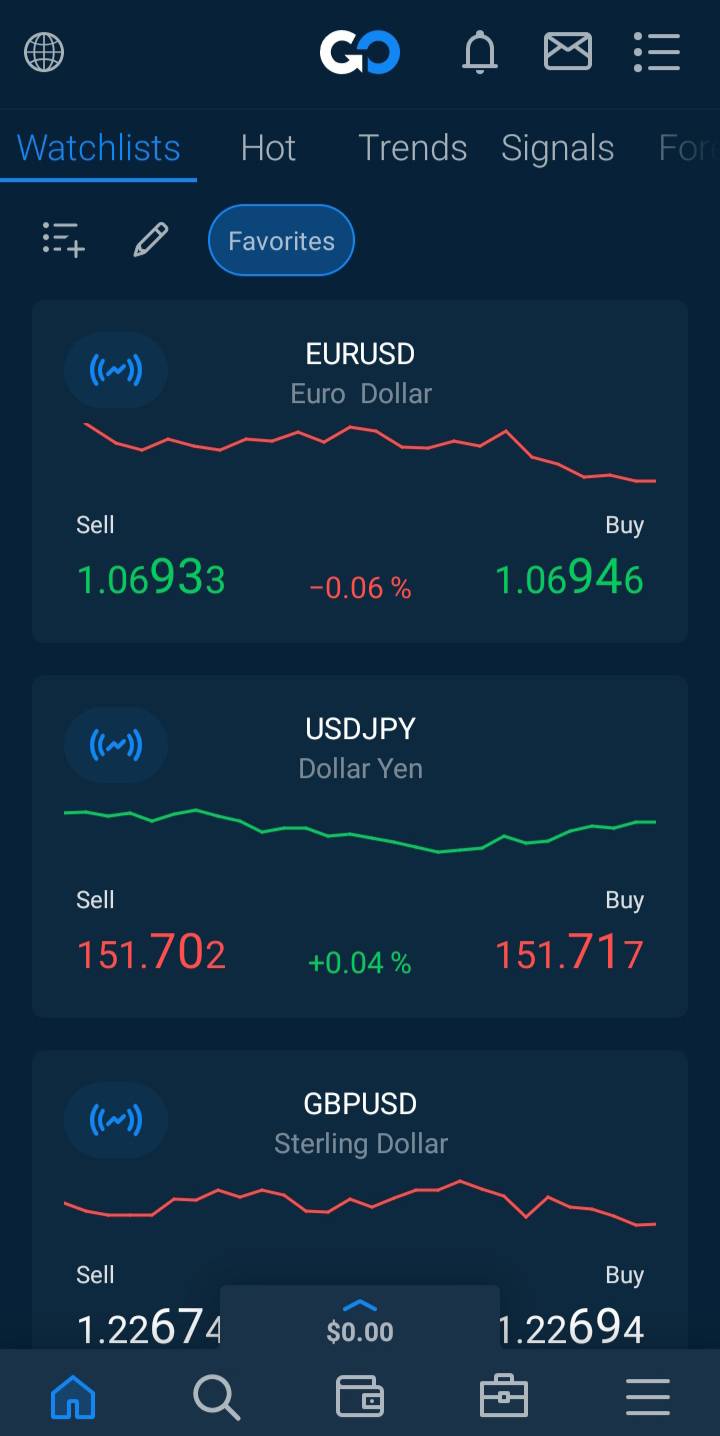
The AvaTradeGO mobile app is designed for ease of use - a good fit for beginner and intermediate traders in South Africa.
South Africans can deposit in Rand (ZAR) using local bank transfers - avoids currency conversion fees and speeds up the funding process.
AvaTrade’s fixed spreads are wider than ECN brokers’ variable ones, making long-term trading less cost-efficient.
No raw spread + commission account types, which may be a drawback for South African traders seeking tighter spreads through ECN-style pricing.
AvaTrade | Best Broker for Beginners
FxScouts
YouTube

Select another broker to another broker to compare features, fees, and platforms side by side.

0 pips
CMA, BaFin, SCB, DFSA, ASIC, CySEC, FCA
USD 0
Pepperstone Platform, TradingView, MT4, cTrader, MT5
200:1
Pepperstone’s Razor account offers spreads from 0.0 pips with low commissions — ideal for South African scalpers and day traders.
Pepperstone fully supports EAs, automation, and high-frequency trading on MT4, MT5, and cTrader — ideal for South African algo traders.
There’s no set minimum deposit, allowing South Africans to start with any budget — whether testing strategies or scaling up over time.
Pepperstone’s low-latency network and top-tier liquidity enable 30ms average execution — allowing traders in South Africa to trade in fast-moving global markets.
South Africans can trade on all major platforms, including TradingView, offering flexibility in charting, execution, and integration with trading tools.
Pepperstone doesn’t offer deposit bonuses or welcome promotions, which may disappoint South African traders looking for initial incentives or extra trading capital.
Pepperstone is not licensed by the Financial Sector Conduct Authority, leaving South African traders without local regulatory protection.
Pepperstone | Best For: Algo Traders & Scalpers
FxScouts
YouTube


Select another broker to another broker to compare features, fees, and platforms side by side.

0.1 pips
JSE, CMA, FSA-Seychelles, FSC, B.V.I FSC, FSCA
USD 3
Exness Terminal, MT4, MT5
Unlimited:1
Exness offers uncapped leverage through its global entity - best suited for experienced South African traders with disciplined risk management.
Withdrawals via local methods like Ozow are processed in seconds — even on weekends — giving South African traders fast, reliable access to their funds.
With a minimum deposit as low as $5, Exness is highly accessible to South Africans starting out with small capital or testing new strategies.
Exness is authorised by the FSCA as an Over-the-Counter Derivative Provider (ODP) — giving South African traders the protection of enhanced regulatory oversight and fund protection.
Exness gives South African traders access to a selection of more than 100 Forex pairs — more than many FSCA-regulated competitors.
Exness doesn’t support cTrader or TradingView, which may limit options for South Africans who rely on advanced charting or third-party tools.
Unlimited leverage is appealing but very risky, and losses can escalate quickly — especially for inexperienced traders without strong risk management.
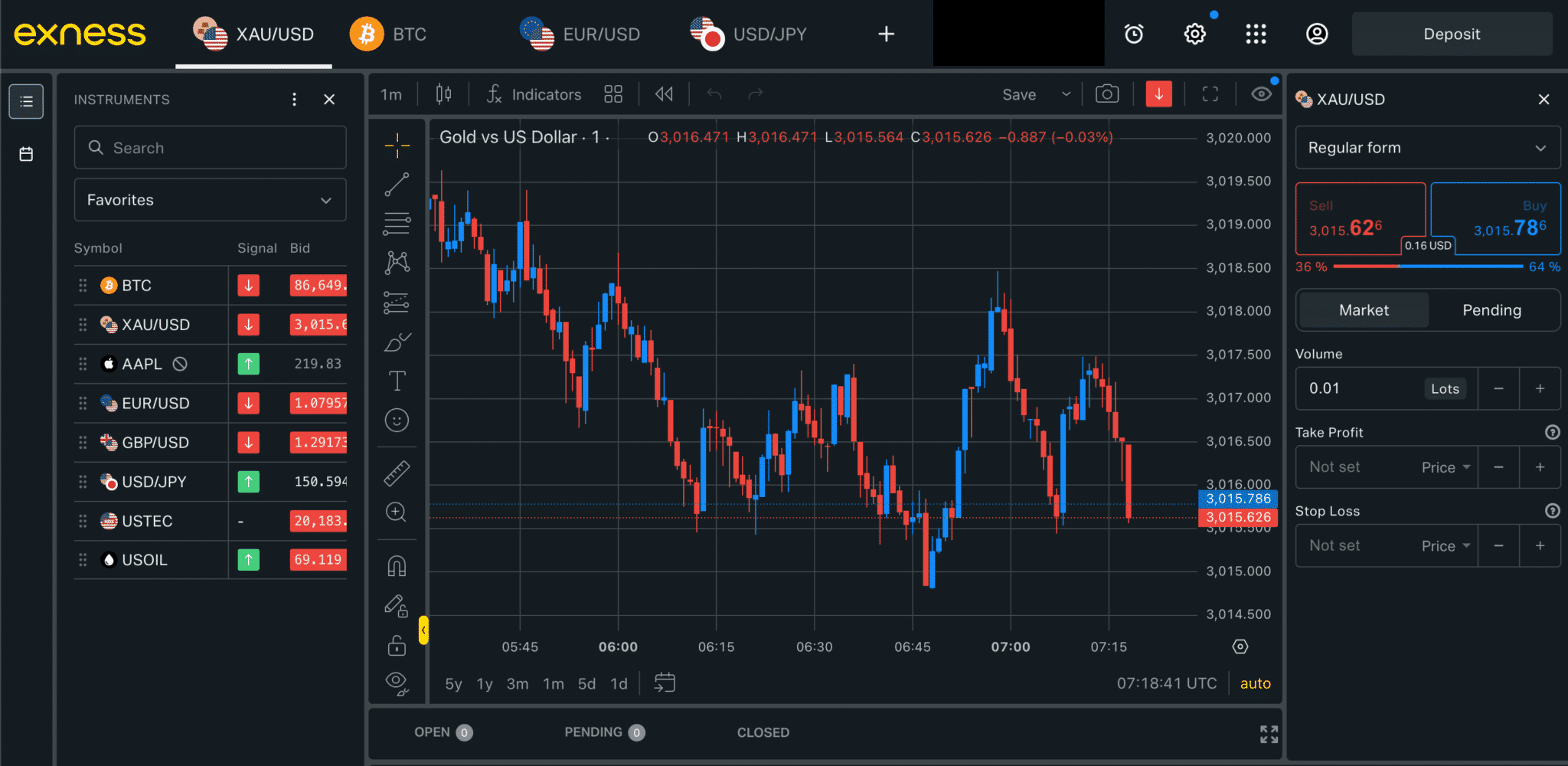
Exness | Best For: Unlimited Leverage & Instant Withdrawals
FxScouts
YouTube
Select another broker to another broker to compare features, fees, and platforms side by side.

0.8 pips
KNF, FSC, FCA, CySEC
USD 0
xStation5
500:1
XTB is authorized by FSCA (South Africa), FCA (UK), and several Tier-1 regulators — offering multi-jurisdictional protection and segregated accounts.
Perfect for new traders or those testing strategies — no financial barrier to start trading.
xStation 5 is one of the best proprietary platforms globally, offering ultra-fast execution, built-in sentiment tools, and real-time trader statistics. More intuitive than MT4 or MT5 for beginners.
Access to 2,100+ CFDs including forex, indices, commodities, shares, and ETFs — one of the widest selections available to South African traders.
XTB Academy features in-depth video tutorials, daily market analysis, and live webinars tailored for local and international traders.
XTB has phased out both MT4 and MT5, which may deter seasoned traders reliant on EAs or custom indicators.
XTB operates a market maker model (though with NDD features), which may concern advanced traders seeking DMA/STP-only brokers.
XTB reports 78% of retail accounts lose money — higher than the industry average, indicating potential risk for inexperienced traders.
XTB | Best For: South African traders seeking zero-minimum deposits, fast STP execution, and access to global markets via xStation 5
FxScouts
YouTube
Select another broker to another broker to compare features, fees, and platforms side by side.

Selecting the right Forex broker in South Africa is crucial for safe, transparent, and cost-effective trading. Understanding regulation will help you make an informed decision.
Yes, Forex trading is legal in South Africa, as long as Forex brokers are regulated by the Financial Sector Conduct Authority (FSCA). Under South African law, Forex trading and foreign currency investments are treated as official financial products. That means anyone who offers advice on them or helps you invest in them must be properly licensed as a Financial Services Provider (FSP). They must also abide by South Africa’s Exchange Control regulations, which govern the flow of money into and out of the country. These regulations are derived from two important pieces of legislation: the Financial Sector Regulation (FSR) Act of 2017 and the Financial Advisory and Intermediary Services (FAIS) Act of 2002. These acts outline the conditions that must be met by anyone providing services such as Forex trading or other derivatives in South Africa.
The Financial Sector Conduct Authority (FSCA) came into effect on 1 April 2018, replacing the old Financial Services Board (FSB). It was created according to the Financial Sector Regulation Act of 2017 to strengthen oversight of South Africa’s financial markets. The FSCA’s main job is to ensure financial companies treat customers fairly, help improve financial education across the country, and support the overall stability of the financial system.
The new law also gave the FSCA a broader role than its predecessor. In addition to overseeing insurance and investment services, it now also looks after non-bank financial products, credit services, and even foreign exchange transactions. This expanded mandate allows the FSCA to act as a more complete regulator across the financial sector.
The FSCA has the authority to:
Below, we list the main criteria FSCA-regulated Forex brokers must follow to safeguard traders’ funds and ensure they are treated fairly:
Here’s how South African traders can verify a broker’s credentials before depositing any money:
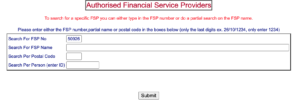
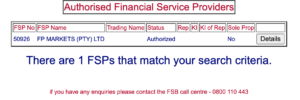
If the broker does not appear in the register, they are not FSCA-regulated.
Note: All FSCA-regulated brokers must clearly display their FSP license number on their website. If the broker does not display a number, the broker may not be authorised. Only use the email address and phone number listed on the FSCA register to contact the broker.
Additionally, scammers often clone legitimate broker websites. To make sure you’re on the correct one:
Besides regulation, trading costs are another important factor to consider when choosing a Forex broker. Trading costs include both spreads and commissions, and different brokers have different fee structures, depending on their pricing model, regulatory obligations, account types, and the trading platforms they offer.
In Forex, the spread is the difference between a currency pair’s buy price (ask) and the sell price (bid). It’s how most brokers make their money, especially those that offer commission-free trading.
For example, if the EUR/USD is quoted at 1.1000 (buy) / 1.0998 (sell), the spread is 2 pips. This means your trade starts 2 pips in the negative—you have to earn that back before you’re in profit. Lower (or tighter) spreads mean higher potential profitability over time.
From our experience, cost-effective Forex brokers are those that offer commission-free accounts with spreads lower than 1 pip on the EUR/USD. Examples include:
Note: Spreads can widen during major news events or periods of low market liquidity, such as late-night trading sessions. This can increase your costs and make it harder to manage your risk.
Some brokers, particularly ECN or Raw account brokers, charge a small commission per trade on top of offering extremely tight spreads (often close to 0.0 pips). This model is usually cheaper overall, especially if you’re trading larger positions or using a high-frequency strategy.
We found that brokers that have spreads close to 0 pips (EUR/USD) and a commission of 3.5 USD per side per lot are among the lowest in the industry. Examples include:


South Africa has a strong Forex trading industry, with FSCA-regulated brokers providing safe, transparent, and affordable trading options. Beginners should look for low-cost, user-friendly brokers, while experienced traders may prefer ECN accounts with advanced tools. Always check regulation, fees, and withdrawal policies before choosing a broker.


South Africa has a well-regulated Forex trading industry, making it one of the safest places to trade Forex in Africa. Below are answers to common questions traders have when choosing a broker in South Africa.
The best Forex brokers for South African traders are those regulated by the Financial Sector Conduct Authority (FSCA) and also hold licenses with top-tier international regulators. Examples include FP Markets, AvaTrade, IG Markets South Africa, and Octa. In addition to their FSCA licences, they are also regulated by some of the most respected financial authorities globally, including the ASIC in Australia, the FCA in the United Kingdom, and the CySEC in Europe. This multi-jurisdictional regulation gives traders an added layer of safety, as it ensures that these brokers are held to high international standards across multiple regions.
These brokers also offer accounts denominated in ZAR, which means traders can avoid paying currency conversion fees. They have low trading fees, offer a wide range of financial instruments, provide local customer support, and enable deposits and withdrawals to and from South African banks.
After selecting an FSCA-regulated forex broker, you’re ready to move forward with the following steps to begin trading:
We always recommend opening a demo account first to get comfortable with the broker’s trading platforms and test out various strategies. Once you are consistently profitable on a demo account, open a live account. This involves completing the live account application on the broker’s website and submitting your KYC (Know Your Customer) documentation.
Forex brokers in South Africa are also subject to the Financial Intelligence Centre Act (FICA), which means they must verify your identity, confirm your source of funds, and monitor transactions for suspicious activity.
Tip: Always read the broker’s terms and conditions carefully, as these vary between brokers.
Most South African brokers offer local payment options, including EFTs to banks such as ABSA, Standard Bank, Nedbank, Capitec, and FNB. E-wallet services like Ozow and PayFast may also be available.
Only deposit funds you are comfortable losing, especially in the beginning stages of your trading journey.
Once you’ve completed your technical and fundamental analysis, you can open a position by clicking ‘buy’ to go long or ‘sell’ to go short. Set your position size based on your risk tolerance, and use stop-loss and take-profit levels to manage risk. Order types include market, limit, and stop orders.
For more details, check out our video on pending orders.
Trading is challenging, and no strategy works all the time. You will experience losses, so it’s important to journal your trades and learn from your mistakes. Continue educating yourself—join trader communities, attend webinars, and listen to podcasts.
Don’t underestimate the importance of trading psychology. Staying disciplined and emotionally grounded is key to becoming a successful trader.
Yes. According to the South African Revenue Service (SARS), Forex profits are taxable if they form part of your earnings. If you trade as an individual, your profits may be taxed under personal income tax. If you operate through a registered entity, corporate tax may apply.
Pro Tip: Consult a registered tax practitioner to determine whether your trading qualifies as occasional income, hobby income, or business income. SARS may treat these cases differently based on your trading frequency and intent.
The Forex market runs 24 hours a day, five days a week. However, the local opening time in South Africa changes with daylight saving time in the Northern Hemisphere.
These times mark the beginning of the Sydney trading session, which kicks off the global trading week on Monday morning.
Keep in mind: Although the market opens with the Sydney session, the most active hours for South African traders are typically during the London session (09:00–18:00 SAST) and the New York session (14:00–23:00 SAST), when liquidity and volatility are highest.
For more details, read our full article on the best times to trade Forex in South Africa.
If you’re new to Forex trading, your needs will differ from experienced traders. As a beginner, you should prioritise brokers that offer educational support, low entry costs, and strong local assistance.
The best brokers for beginners typically:
Based on our research and testing, brokers that cater well to South African beginner traders include:
The best trading platforms for South African traders offer fast execution, robust charting tools, and support for both manual and automated trading strategies. Popular options include MetaTrader 4 (MT4), MetaTrader 5 (MT5), cTrader, and proprietary apps developed by top brokers.
| Platform | Best for | Key Features | Available through |
|---|---|---|---|
| MetaTrader 4 (MT4) | Beginners | User-friendly interface, Expert Advisors (EAs), one-click trading, custom indicators | Exness, AvaTrade, Pepperstone, HFM, XM |
| MetaTrader 5 (MT5) | Advanced & multi-asset traders | More order types, built-in economic calendar, depth of market, faster backtesting | Exness, AvaTrade, Pepperstone, HFM, XM |
| cTrader | Scalpers & ECN traders | Level II pricing, Depth of Market (DoM), lightning-fast execution, custom cBots | Pepperstone, FP Markets, IC Markets |
| TradingView | Charting-focused traders | Best-in-class charting tools, hundreds of indicators, social trading features | Pepperstone, FP Markets, IC Markets, Exness (via integration) |
| Proprietary Platforms | Beginners, those looking for easy-to-use platforms | Clean, intuitive interfaces, integrated trading tools, tailored for mobile devices | IG (Pro Realtime), AvaTradeGO, XTB (xstation5) |
Explore more resources that fellow traders find helpful! Check out these other guides to enhance your forex trading knowledge and skills. Whether you’re searching for the best brokers, educational material, or something more specific, we’ve got you covered:

Discover how Forex Trading works with our essential guide. Understand key terminology with examples and learn how to make your first successful trade.

We’ve tested hundreds of Forex brokers to find the safest, low-cost, and reliable brokers. Compare fees, and features—trade smarter with expert insights!

Explore the best Forex brokers for beginners, with user-friendly platforms, educational resources, and demo accounts.
60-90% of retail traders lose money trading Forex and CFDs. You should consider whether you understand how CFDs and leveraged trading work and if you can afford the high risk of losing your money. We may receive compensation when you click on links to products we review. Please read our advertising disclosure. By using this website, you agree to our Terms of Service.
Partner Manager and Financial Writer

Head of Content
Financial Writer



Welcome to the FxScouts community! We’re thrilled to have you on board. You’ve successfully signed up for our forex newsletter, where you’ll receive expert insights, market analysis, and the latest news straight to your inbox.
Get ready to stay ahead of the curve with our regular updates designed to help you make informed trading decisions.
Happy trading!
The FxScouts Team